Bookcase design by Ornare: six collections, one wall, endless configurations
Pick up any design magazine and count how many living rooms feature a bookcase that actually looks right. Not just functional — genuinely resolved, like it belongs to the room rather than sitting in front of it. It’s rarer than it should be, and the reason is almost always the same: the bookcase was chosen after everything else was decided, sized to fit a gap rather than designed for a wall. Ornare starts from the opposite position. The wall comes first, the collection comes second, and the result is a bookcase that reads as part of the architecture rather than furniture placed in front of it.
How Ornare’s bookcase collections approach the wall differently
Six collections in the Ornare Bookshelves & Multimedia catalog address the bookcase problem, and each one represents a genuinely different design position — not a variation in color or handle style, but a fundamentally different idea about what a bookcase wall should do in a room.
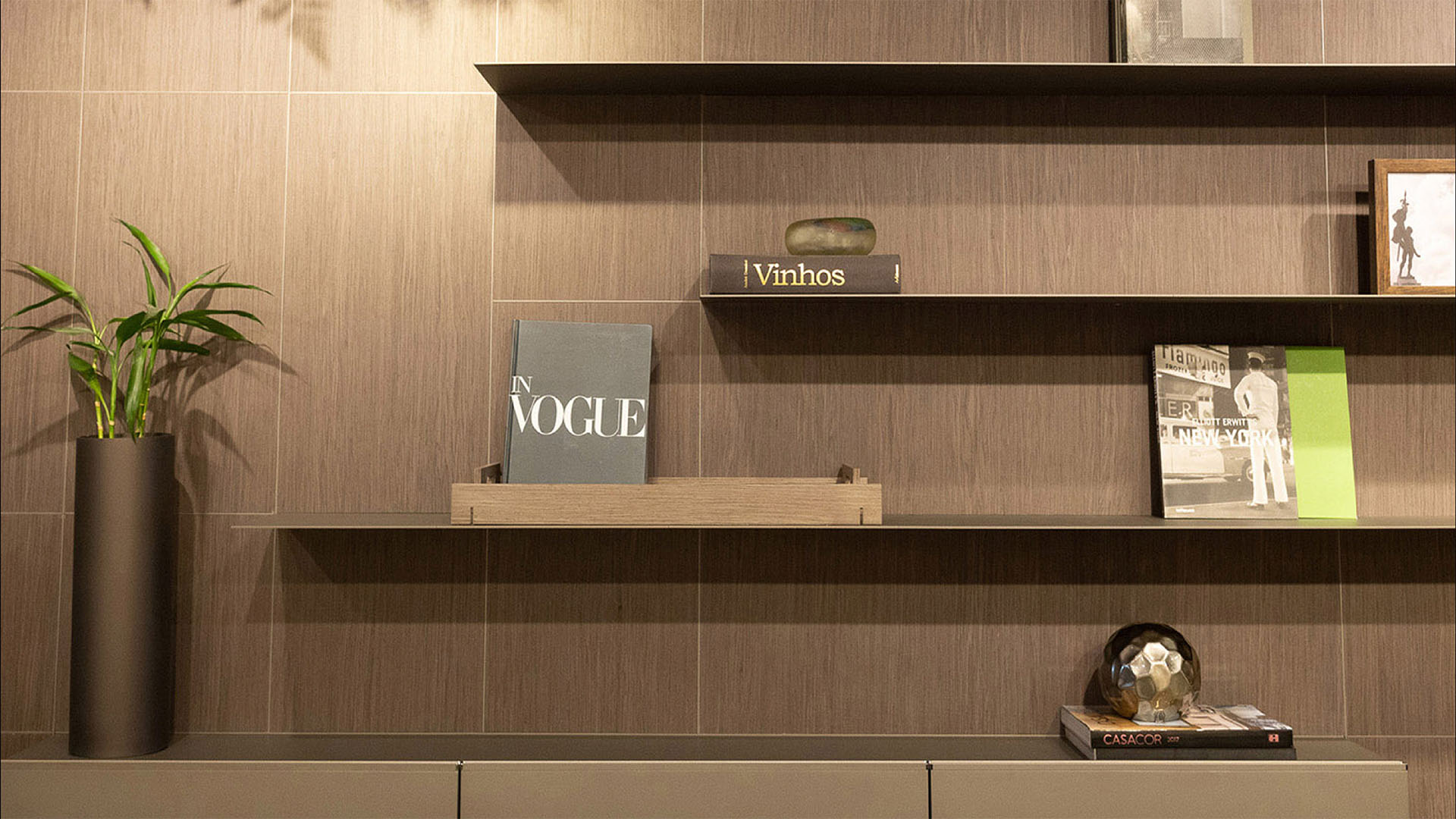
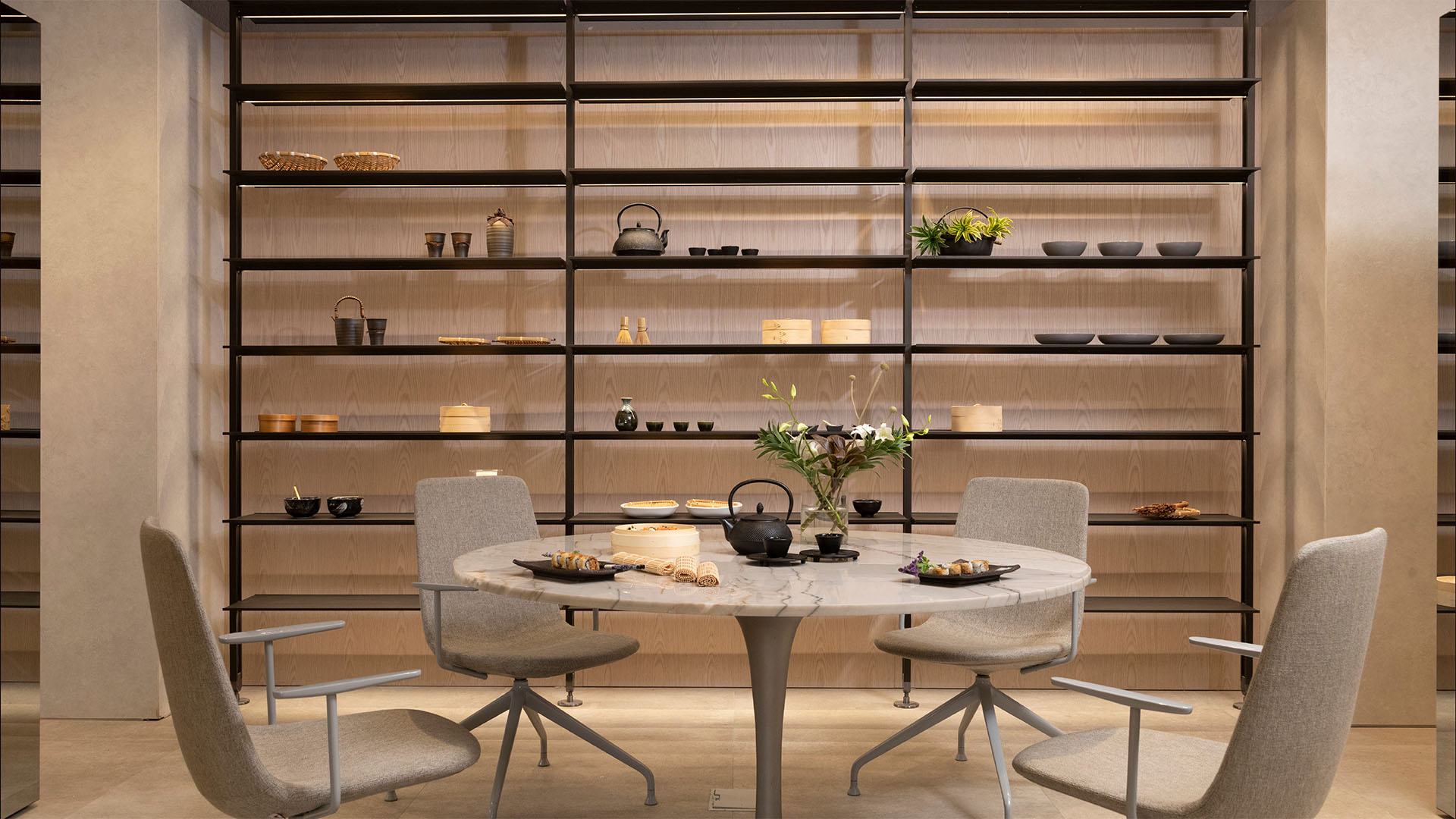
Square Wall is the most architecturally assertive: a modular system of varying depths that creates a three-dimensional surface across the entire wall. The play of light and shadow across modules of different depths changes throughout the day, making the wall itself an active visual element. It’s a bookcase that works as sculpture, which suits rooms where the wall is meant to be the focal point. Ikigai Bookshelf operates from a completely opposite premise — an exposed metal structure that filters the wall rather than covering it, light enough visually to work in rooms where the bookcase should recede rather than dominate. Books and objects sit within the grid, but the wall behind remains partially visible, keeping the room from feeling closed off.
Timeless Bookshelf and Wall System Living sit between these two extremes. Timeless brings proportions that feel settled and permanent — the kind of built-in bookcase that looks like it was always there, which is one of the most difficult effects to achieve and one of the most valued when it works. Wall System Living is the most configurable of the group: open shelving, closed cabinets, display niches, media sections, and bar elements can all be combined within a single continuous composition, making it the right choice when the wall needs to handle multiple functions rather than storage alone. Shaker Wall Bar and Timeless Bar add a dedicated bar function to the bookcase equation — integrated rather than adjacent, designed as part of the wall rather than an afterthought beside it.
Custom bookcase sizing: why standard dimensions produce standard results
A custom bookcase built to the exact dimensions of the room does something a standard unit can’t: it makes the room feel intentional. When shelving runs from wall to wall and floor to ceiling without gaps, filler strips, or sections that end short of the architectural boundary, the eye reads the space as designed rather than assembled. The difference is visible immediately and impossible to replicate with off-the-shelf sizing.
Ornare builds to actual measurements — the specific width, height, and depth of the wall in question, accounting for any architectural details that interrupt the surface. In a New York apartment at the A&D Building showroom on East 58th Street, the team regularly works with walls that are out of square, have baseboards that vary in height, or have ceilings that slope or drop unexpectedly. These aren’t obstacles to a custom bookcase — they’re parameters that get incorporated into the design from the beginning, producing a result that fits the room precisely rather than approximately.
Bookcase interior organization: shelves, closed storage, and the balance between them
The ratio of open shelving to closed storage is one of the most consequential decisions in any bookcase design, and it’s one that most people underestimate until they’re living with the result. All open shelving requires constant curation — every object on every shelf is always visible, which means the bookcase only looks good when everything on it looks good. All closed storage solves that problem but creates a wall of cabinet fronts that can feel heavy and undifferentiated. The most functional and visually interesting bookcases combine both: open sections for books and selected objects, closed sections for everything else.
Ornare designs the interior organization of each bookcase as part of the project from the start — adjustable shelf heights to accommodate books of different sizes, dedicated sections for oversized volumes or art books, closed lower cabinets for items that don’t need to be visible, and display niches at eye level for objects that benefit from framing. The Dallas Design District showroom and the Los Angeles location in West Hollywood both have installations that show different open-to-closed ratios in full scale, which is the most useful way to calibrate this decision before committing to it.
Bookcase finish and lighting: the two decisions that determine how the wall reads at night
During the day, a bookcase is mostly about the books and objects it holds. In the evening, when artificial light takes over, the finish of the bookcase itself becomes the dominant visual element — and this is where the material decision matters most. A matte lacquered bookcase in a warm neutral reads as architectural millwork, recessive and clean. A wood veneer bookcase catches the evening light differently across its surface, with the grain creating a texture and depth that flat color can’t replicate. A high-gloss finish reflects the room back at itself, which can amplify the sense of space in a smaller room or create an effect that’s too active in a larger one.
Integrated lighting shifts the equation further. LED strips positioned under shelves or within the bookcase structure illuminate books and objects from above rather than from across the room, creating pools of warm light that make the wall glow in a way that overhead fixtures can’t achieve. Ornare builds lighting into its bookcase systems as part of the design — not as an add-on — which means the electrical planning happens before installation rather than after.
For clients at the Hamptons showroom in Southampton, the Greenwich location, the Palm Beach showroom, or the Washington D.C. location on Cady’s Alley, seeing the evening lighting scenarios in person is one of the most useful parts of the design process: it’s the moment when the bookcase stops being a daytime storage solution and becomes a room-defining element that works around the clock.