Deco bookshelf: when storage becomes the most designed thing in the room
There’s a specific type of living room where the bookshelf isn’t background — it’s the room. The wall is the statement. Everything else — the sofa, the rug, the art — works in relation to it rather than the other way around. This is what a deco bookshelf does at its best: it elevates storage into a design element with enough presence and visual intelligence to anchor an entire interior.
Getting there requires more than choosing an interesting collection. It requires thinking about the bookshelf as architecture: how it fills the wall, how it interacts with light, how it balances open display against closed storage, and how the materials and proportions relate to everything else in the room. Ornare’s Bookshelves & Multimedia collections are built for exactly this level of design ambition — systems that produce walls worth looking at, not just walls that hold things.
Square Wall: the deco bookshelf that sculpts the wall surface
If there’s a single collection in the Ornare catalog that most directly answers the deco bookshelf brief, it’s Square Wall. The system is built around modules of varying depths that project from the wall surface at different distances, creating a three-dimensional composition that catches light differently at different times of day. In the morning, with raking sunlight from a window, the relief pattern casts defined shadows that make the wall read as a sculptural surface. In the afternoon with diffuse light, the same wall flattens into a more uniform composition. In the evening with artificial light, the depth variations create a dramatically different effect again.
This responsiveness to light is what distinguishes Square Wall from any flat bookshelf system, however well designed. The wall isn’t static — it changes throughout the day, which means the room changes with it. For living rooms in New York, Miami, or Los Angeles where the quality of natural light varies significantly across different times of day, this dynamic quality adds a dimension to the space that no amount of art or accessories can replicate. Square Wall installations at the Ornare showrooms in both cities show how this plays out at full scale, in real light conditions — worth experiencing before making any bookshelf decision at this level of investment.
Ikigai Bookshelf: decorative structure as the design statement
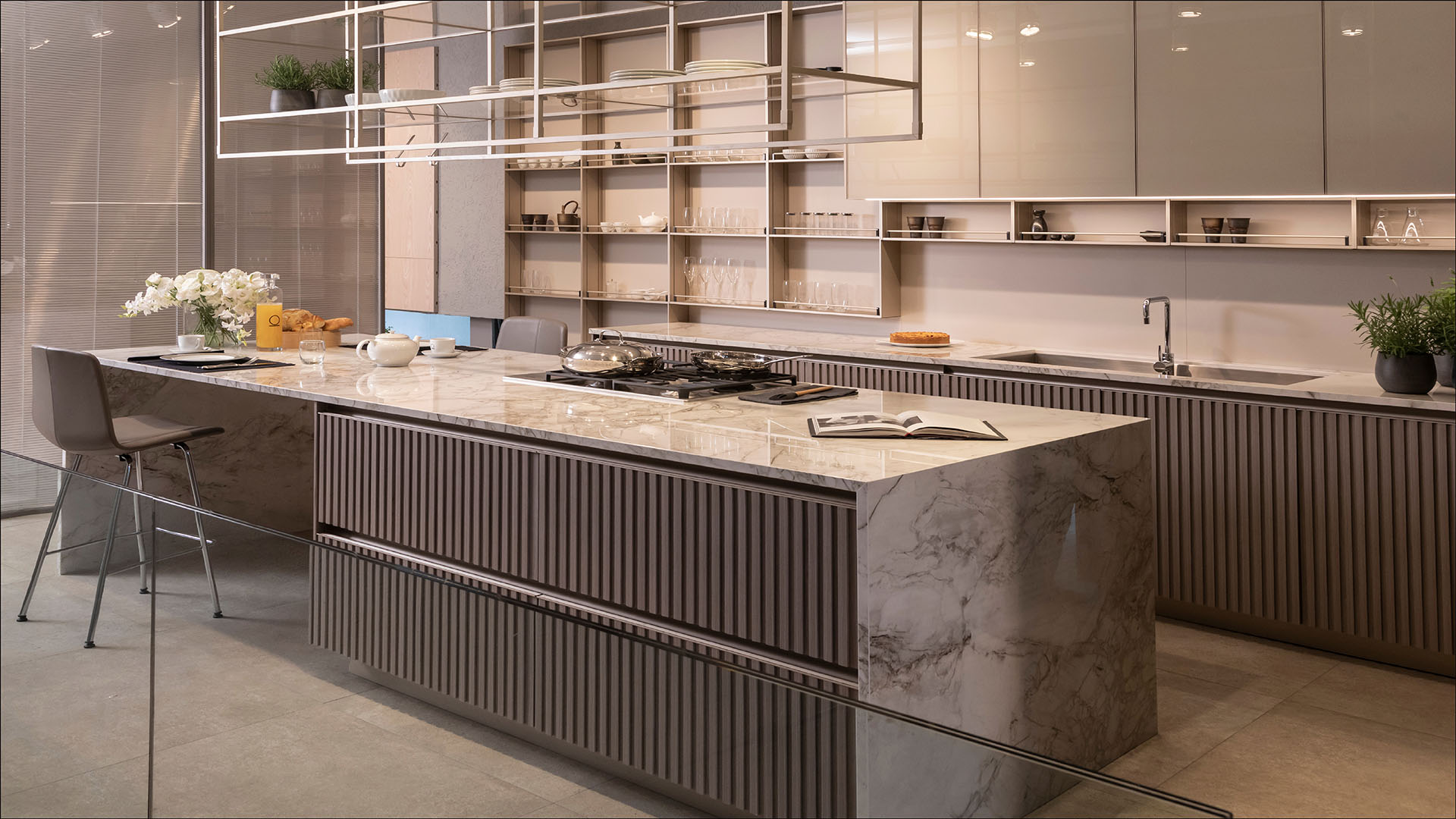
Where Square Wall creates its deco effect through mass and relief, Ikigai Bookshelf works through transparency and structure. The collection’s defining element is an exposed metal frame — precisely engineered, geometrically rigorous, visually light — that organizes the shelving into a grid of open compartments. Books and objects sit within the grid, but the frame itself is always present as a design element, creating a layer of visual complexity that a standard shelving system doesn’t have.
The decorative quality of Ikigai comes from this structural honesty: the bookshelf doesn’t pretend to be a wall or a piece of furniture. It’s clearly a designed object with a specific material logic, and that specificity is what gives it presence in a room. In homes in Dallas, Houston, and Washington D.C. where contemporary interiors often mix industrial and refined references, Ikigai reads as a sophisticated interpretation of that aesthetic — structured without being cold, decorative without being ornamental.
Combining deco bookshelf sections with functional storage: the design discipline that makes it work
The risk with any deco bookshelf approach is that the visual ambition overwhelms the practical function. A wall that looks extraordinary but can’t accommodate a real book collection without looking cluttered has failed at something essential. The most successful decorative bookshelves resolve this tension by distinguishing clearly between the sections that are meant to be seen and the sections that are meant to store — giving each a different treatment within a unified composition.
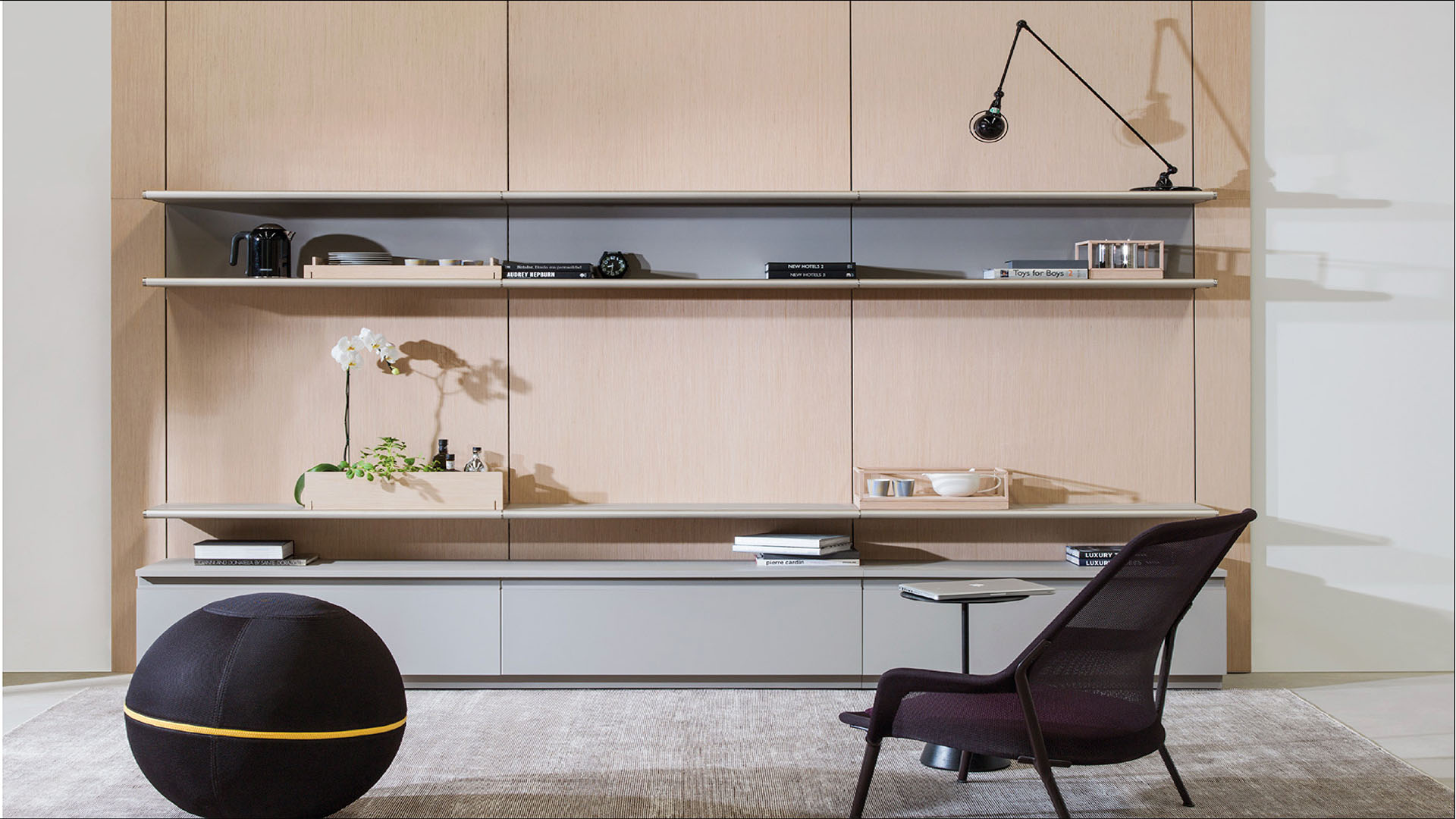
Ornare’s Wall System Living is the most useful tool for this kind of calibrated approach. Open display sections — perhaps with Square Wall’s three-dimensional treatment or with carefully spaced shelving at generous proportions — handle the decorative layer. Closed cabinet sections in coordinated finishes handle the practical storage that doesn’t benefit from visibility. The balance between the two is determined by the specific room and the specific collection, not by a default ratio.
A client in Greenwich or Palm Beach with a curated collection of art books and objects can lean heavily toward open display. A client in New Jersey or the Hamptons who needs the bookshelf to absorb a broader range of items benefits from more closed storage with the deco elements concentrated in the sections that matter most visually.
Materials and finishes for a deco bookshelf: what reads at room scale
The finish choice on a decorative bookshelf has more visual impact than on almost any other piece in a room, because the surface area is large enough that the material reads as architecture. A natural wood veneer across a full-width bookshelf introduces grain, warmth, and material depth at a scale that changes the temperature of the entire room. A lacquered finish — whether matte, satin, or gloss — creates a different quality: more controlled, more precise, more clearly designed. A combination of the two — wood-veneered open sections with lacquered closed cabinets, or the reverse — creates visual layering that adds sophistication without adding complexity.
Integrated lighting amplifies the decorative quality of any bookshelf finish significantly. LED strips positioned under shelves or within open sections illuminate books and objects from above, creating pools of warm light that make the wall glow in the evening in a way that overhead fixtures can’t replicate.
For anyone designing a living room in Los Angeles, Miami or the Hamptons where the evening atmosphere of the space is as important as its daytime character, this lighting integration is worth specifying as part of the bookshelf design rather than addressing it after installation — because the electrical routing and fixture positioning need to be resolved before the shelving goes in, not after.