Entryway shoe storage: built-in solutions that keep the foyer clean and organized
An adult pair of shoes takes up a footprint of roughly 12 by 8 inches. Multiply that by the pairs each person in the house wears in a typical week, add a few for guests and the boots that come out in winter, and a family of four easily needs room for 20 to 30 pairs near the door. That’s the real starting point for entryway shoe storage: not a rack sized to look tidy in a photo, but a built-in system sized to the shoes that actually come in and out every day.
How much entryway shoe storage a household really needs
The most reliable way to plan is to count. For each person, note the pairs in active rotation, usually four to six, then add a margin of two or three pairs for guests and one shelf for seasonal footwear such as boots or sandals. Everything else, from formal shoes to off-season pairs, belongs in the bedroom closet, not in the entry.
That count translates directly into space. A standard shelf 30 inches wide holds three to four pairs of adult shoes side by side, so 24 pairs need six to eight shelves of that width, or about 15 to 18 linear feet of shelf. Tall boots need their own section at least 18 to 20 inches high, and children’s shoes, smaller but more numerous, are easier to manage in low drawers they can reach themselves. Planning this before choosing the system avoids the most common outcome: a cabinet that’s full on the first day.
Shoe storage cabinet systems compared
Different systems fit different entries, and the depth available is usually what decides.
Tilt-out compartments
Tilt-out compartments store shoes at an angle and need only 7 to 10 inches of depth, which makes them the go-to solution for narrow hallways. Their limit is capacity per compartment and shoe type: they work well for flats and sneakers, less well for heels, boots and larger men’s sizes.
Pull-out shelves and drawers
Pull-out shelves on full-extension runners bring every pair into view and work with any type of shoe. They need about 14 to 16 inches of depth, but they make the back of the cabinet as accessible as the front, so no pair gets lost behind another. A low lip along the front edge of each shelf keeps shoes from sliding off when the shelf is pulled out quickly.
Slanted shelves with a heel rail
Fixed shelves set at a slight angle, with a small rail to stop the heels, display shoes toe-out and make them easy to recognize at a glance. They’re common in closets and work well in larger foyers where the cabinet doors can stay open or be made of glass.
Tall shoe closets
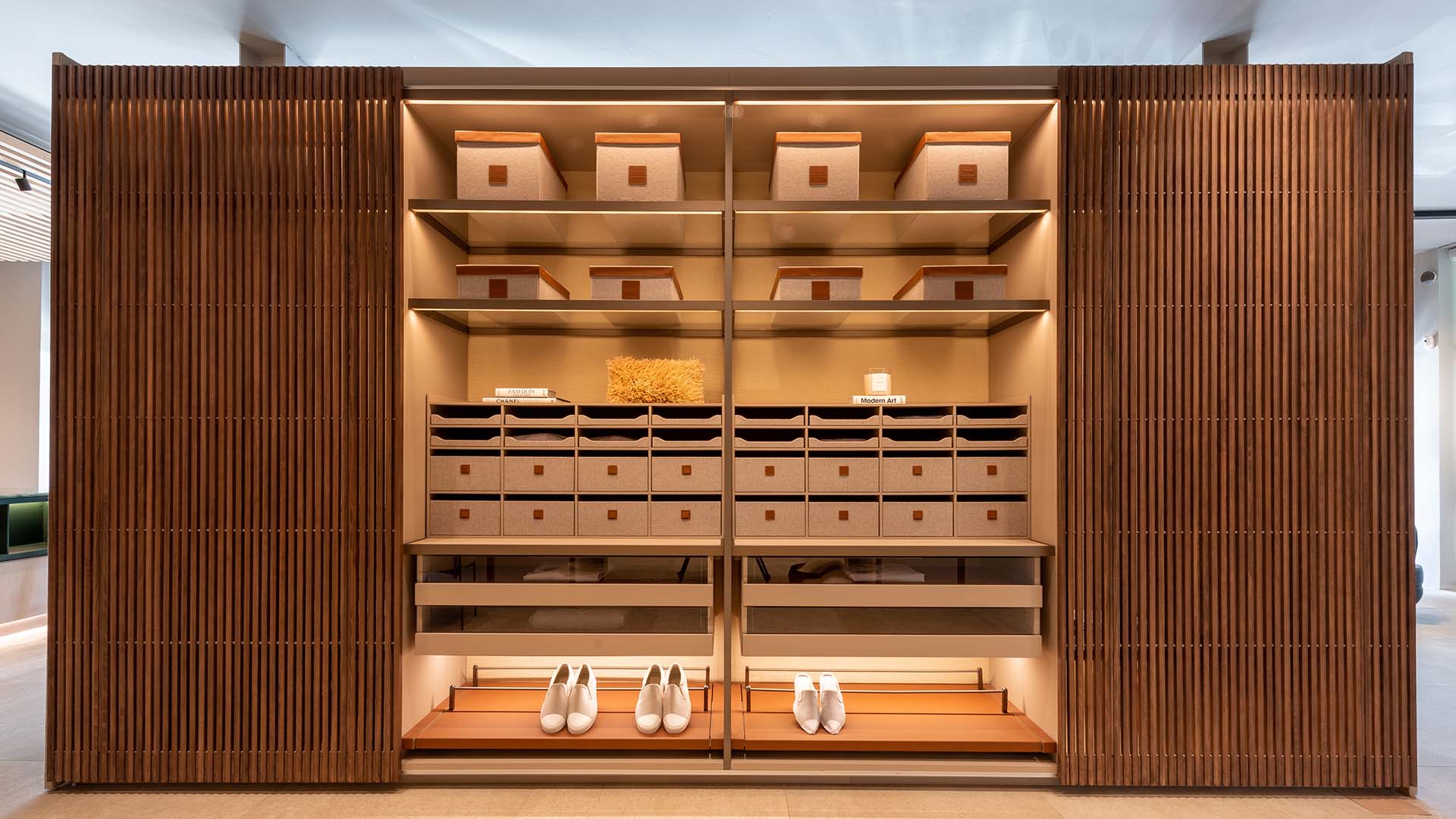
In larger entries, a floor-to-ceiling shoe storage cabinet can hold an entire family’s footwear, with adjustable shelves at the bottom for shoes, a section for boots and upper compartments for bags, hats and seasonal items. Behind closed doors, it keeps the entry visually calm even when it’s full. Placing everyday pairs between knee and chest height, and occasional ones at the top, makes the cabinet faster to use every morning.
Front door or garage entry: where shoes should actually live
In many American homes, the front door is used by guests while the family comes in through the garage. That changes where shoes should be stored. If most of the household enters from the garage, the main entryway storage for everyday shoes belongs in that transition space, a mudroom or a back hallway, and the front foyer only needs room for guests’ shoes and a few pairs for going out.
Wherever it is, the shoe area works best with a place to sit. A bench at about 18 inches high, roughly the height of a dining chair, with a cushion or wood top, makes taking shoes on and off easier for children and older family members. Below it, an open shelf or boot tray takes wet shoes straight from outside, while closed storage alongside holds the dry ones. A durable floor in front, such as stone or porcelain tile, completes the arrangement.
Keeping a shoe cabinet entryway clean: ventilation, trays and materials
A shoe cabinet entryway solution has to handle what shoes bring in: water, mud, sand and odor. Air circulation is the first defense, through ventilated doors, slatted fronts or openings at the back, and wet shoes should never go straight into a closed compartment. A removable tray or a liner under the lowest shelves catches dirt and can be washed in a sink.
Materials matter in the lower part of the cabinet. Surfaces that can be wiped with a damp cloth, durable finishes on shelf edges and plinths that are protected against moisture keep the cabinet looking new after years of daily use. A few cedar blocks or a small charcoal pouch on each shelf help with odor without needing anything electrical.
How Ornare designs built-in shoe storage for different entries
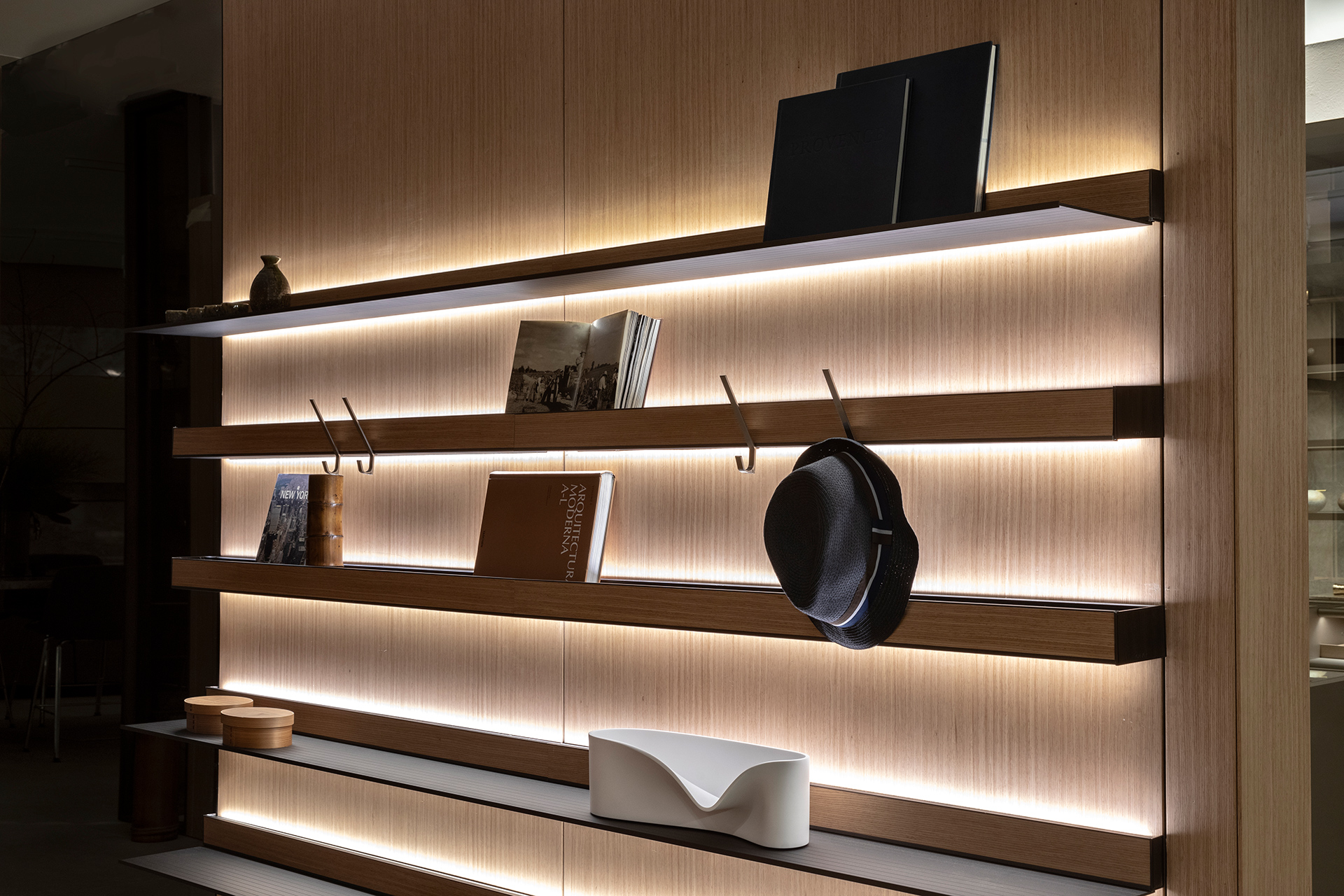
Ornare designs entry and closet storage to the measurements of the space, so the number of shelves, their spacing and the type of door can follow the household’s actual footwear. Three directions from its collections fit different situations.
When airflow is the priority, Ornare’s Timeless line offers solid wood doors in which wood fillets alternate with open space, letting air circulate through the cabinet while keeping the contents out of sight. In a tight foyer where doors must not get in the way, the 270° line uses doors that open up to 270 degrees for direct access to the interior, with a light frame of metal profiles and glass or wood closures. And for a collection of sneakers or designer shoes that deserves to be seen, Crystal Case combines glass and aluminum profiles with lighted shelves, turning a corner of the entry or closet into a display.
One mistake is easy to avoid: designing for the shoes you own today. Children’s feet grow, winter boots get taller, and a household’s habits change. Adjustable shelves, with pins every inch or two, let the same cabinet adapt for years without rebuilding anything.