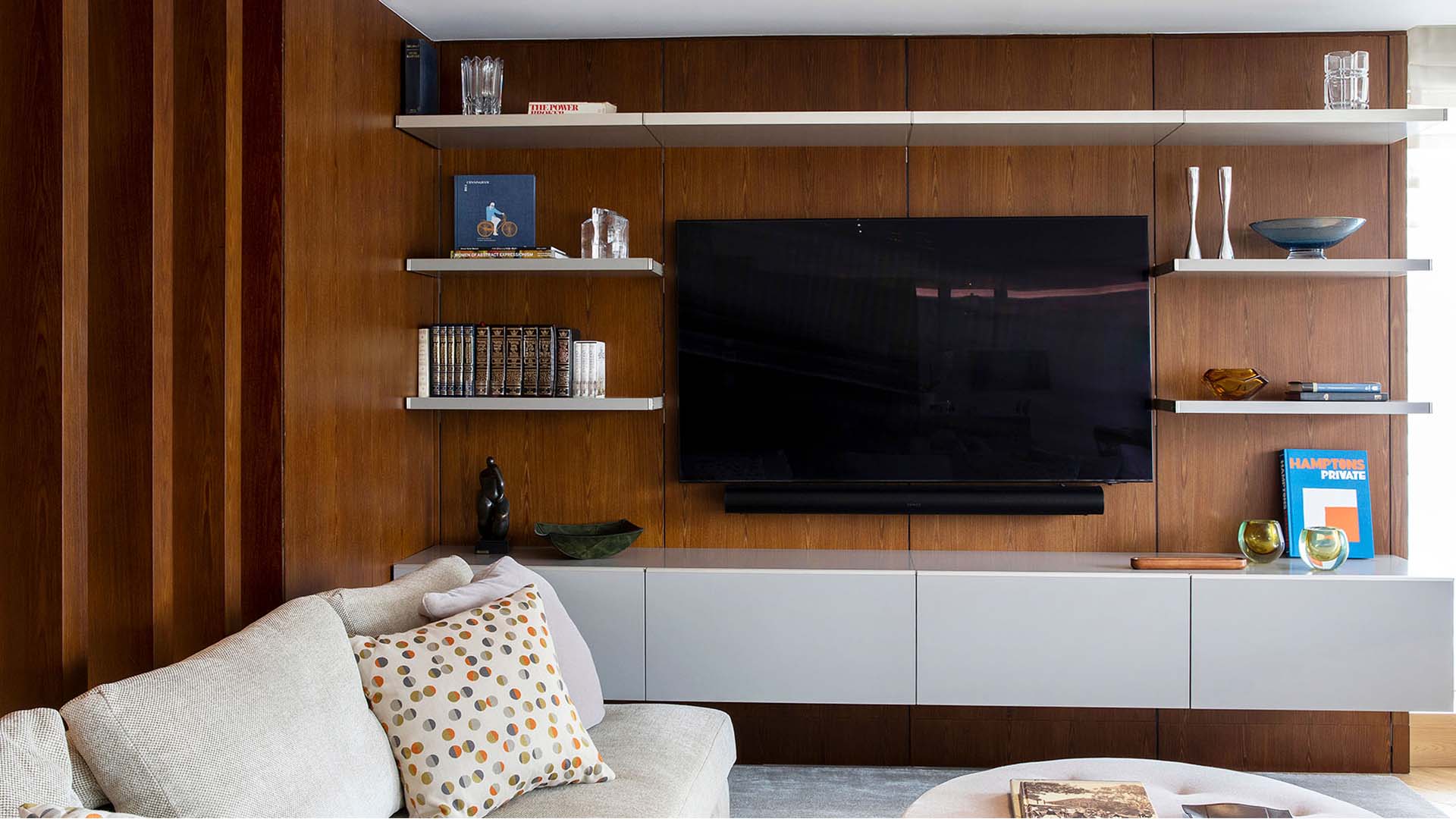
Entryway cabinet: the first storage your guests see and the one you use most
It’s 6:30 in the evening. The front door opens, and in the next thirty seconds the same things happen as every day: keys need a place, a bag comes off the shoulder, shoes come off, a coat needs a hook, the mail needs somewhere to land that isn’t the kitchen counter. If the entry has no answer for these thirty seconds, everything ends up on the nearest flat surface or on the floor. An entryway cabinet designed around that routine is what turns the first square feet of the house into an organized, calm space, and it’s also the first piece of cabinetry every guest sees.
What an entryway cabinet needs to hold, zone by zone
The best way to plan entry storage is to follow the order in which things are put down. The top surface is the drop zone: a tray or shallow bowl for keys, a spot for the mail, room for a lamp. Right below it, shallow drawers of 3 to 4 inches take what is small and easily lost, such as sunglasses, gloves, dog leashes, earbuds and spare keys. A charging drawer with a concealed outlet keeps phones off the console and cables out of sight.
The lower part of the cabinet is for shoes and larger items: everyday shoes for each member of the household, reusable shopping bags, umbrellas, a few sports items. Coats are the one category that often doesn’t fit in a low cabinet, and deciding early whether they go on hooks, in a tall closet section or both is what determines the overall layout of the wall.
Narrow entryway cabinet or full foyer wall: dimensions that work
In many American homes, the entry is a hallway rather than a room, and the cabinet has to coexist with a door swing and a walking path. A narrow entryway cabinet between 12 and 14 inches deep can still hold a surprising amount, especially with tilt-out shoe compartments, which store shoes at an angle and need only 7 to 10 inches of depth. Leave at least 36 inches of clear passage in front of it, and check that the front door, when fully open, doesn’t hit the cabinet or block its drawers.
A top surface between 32 and 36 inches high is comfortable for setting things down while standing, and it lines up with the height of most console tables, door handles and light switches. In a larger foyer, the cabinet can grow into a full wall of foyer storage: a low unit with a long top, flanked by tall sections for coats, or a continuous composition that wraps around the entry door. In homes with high ceilings, carrying the storage up to the ceiling adds space for seasonal items without making the entry feel crowded at eye level.
Shoes, coats and ventilation in an entryway storage cabinet
Shoes are the reason many entry cabinets smell after a few months. An entryway storage cabinet with fully closed, solid doors traps moisture from wet soles and leaves no air circulation. Ventilated doors, slatted fronts or openings at the back keep air moving, and removable trays or washable liners on the shoe shelves make cleaning simple after a rainy or snowy day. Standard flat shoe shelves need 13 to 14 inches of depth for adult shoes, while boots need a section of 18 inches or more in height.
Coats require a different geometry. Hanging coats on a rod needs 22 to 24 inches of depth, which is too much for most hallways, so in narrow entries hooks or a shallow wall system are often the better solution. If there is room for a tall closet section, a rod at about 64 to 66 inches leaves enough length for long coats while keeping shelves above for hats and seasonal accessories.
Open hooks or closed doors: balancing convenience and order
Hooks are the fastest option: a coat goes up in a second, and a bag can hang without searching for a door handle. Their downside is visual. Every item on a hook is on display, and an entry with six coats, three bags and a scarf on the wall rarely looks calm. Closed entryway cabinets hide everything but take a few extra seconds to use, and people tend to skip the extra step when they’re in a hurry.
The most practical solution combines both: a few hooks for what is used daily, ideally one or two per person, and closed storage for everything else. A mirror near the door, mounted at a height that works for everyone in the household, completes the drop zone with the last check before going out.
How Ornare designs entry storage around the daily routine
Ornare designs entry storage as part of the architecture of the house, made to the exact measurements of the wall, so the cabinet can align with the door frame, fit precisely into a niche or run continuously from the entry into the adjacent hallway. Because Ornare also produces doors and panels, the cabinet, the wall paneling and the doors themselves can be designed as one coherent surface.
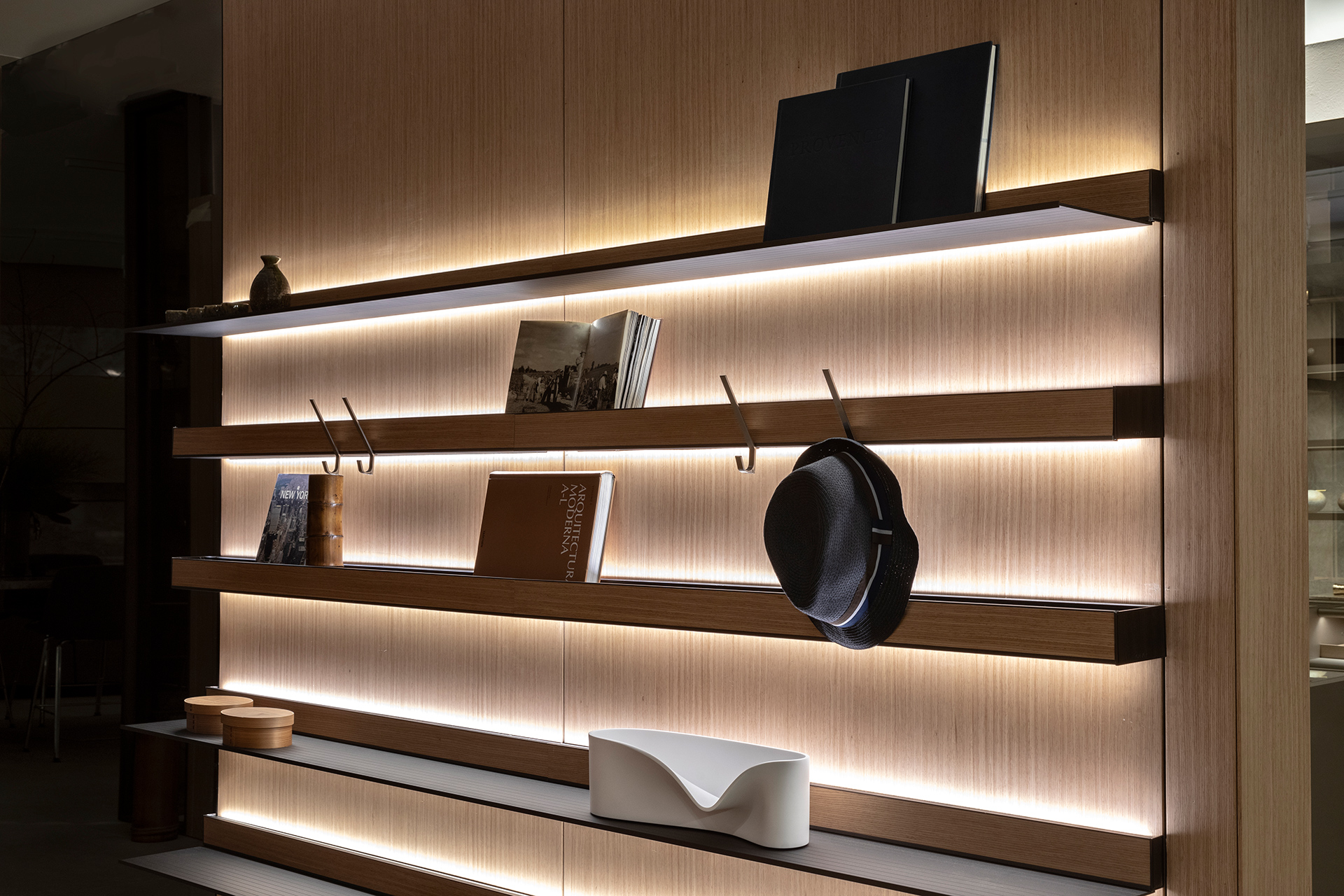
For the problem of ventilation, Ornare’s Timeless line offers solid wood doors in which wood fillets alternate with open space, letting air circulate through the cabinet while keeping the contents discreet; the collection is designed not only for kitchens but also for pantries and cupboards, which makes it a natural fit for shoe storage. For the problem of everyday clutter, the Shaker Wall Bar is a wall-mounted bar inspired by the Shaker tradition of hanging everyday objects on the wall, and it supports shelves, containers and hooks that can also hold a mirror, an approach that suits an entry where coats, bags and keys need to be within reach.
One detail is worth planning from the start: light. Entries are often the darkest part of the house, lit by a single ceiling fixture that leaves the inside of drawers and the bottom shelves in shadow. A low LED strip under the cabinet, switched by a motion sensor, lights the floor and the shoe area when someone comes in at night, while a soft light above the drop zone makes it easy to find keys without turning on the main lights. Both need power at the right point in the wall, which is far simpler to provide before the cabinet is installed than after.