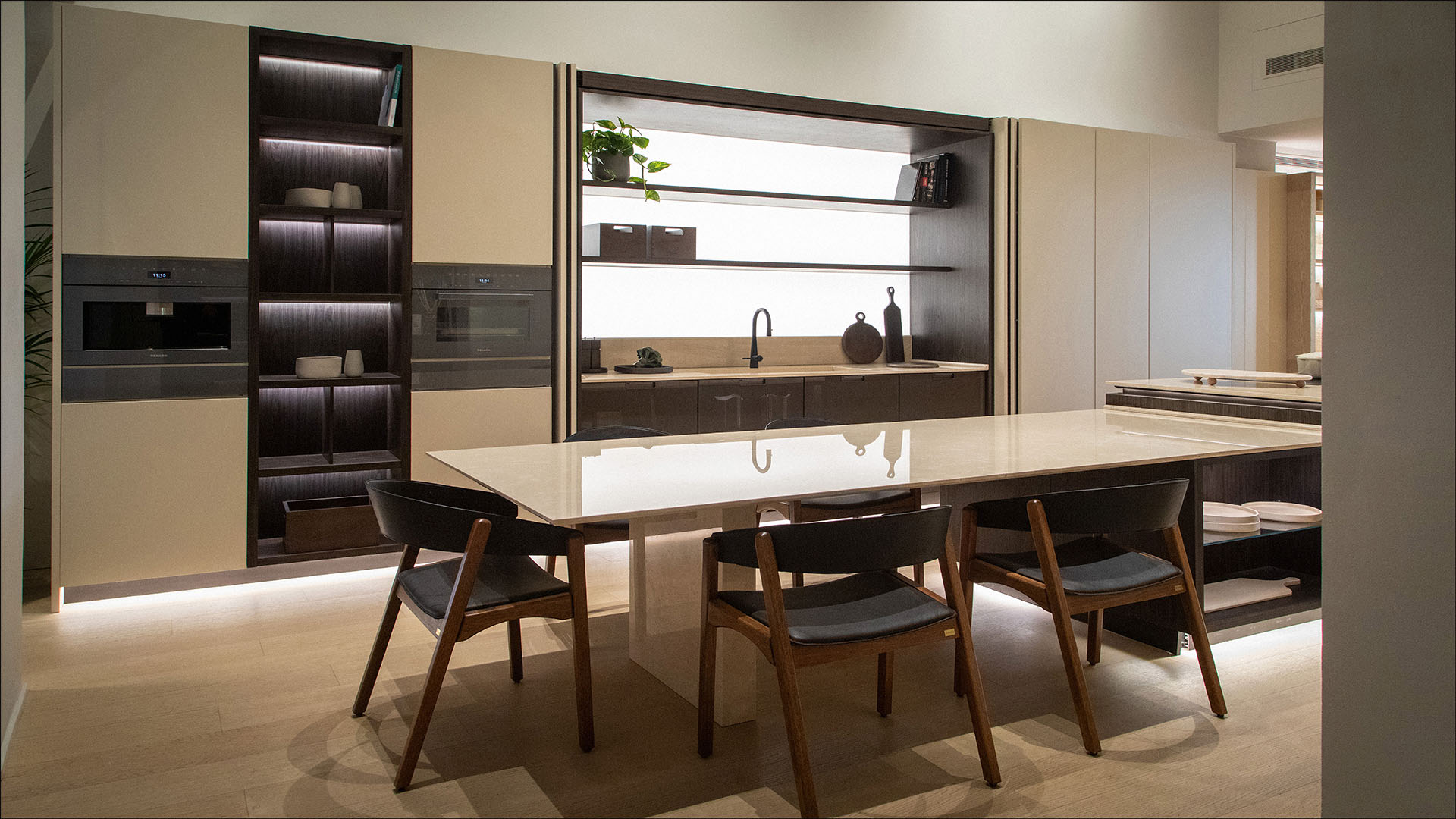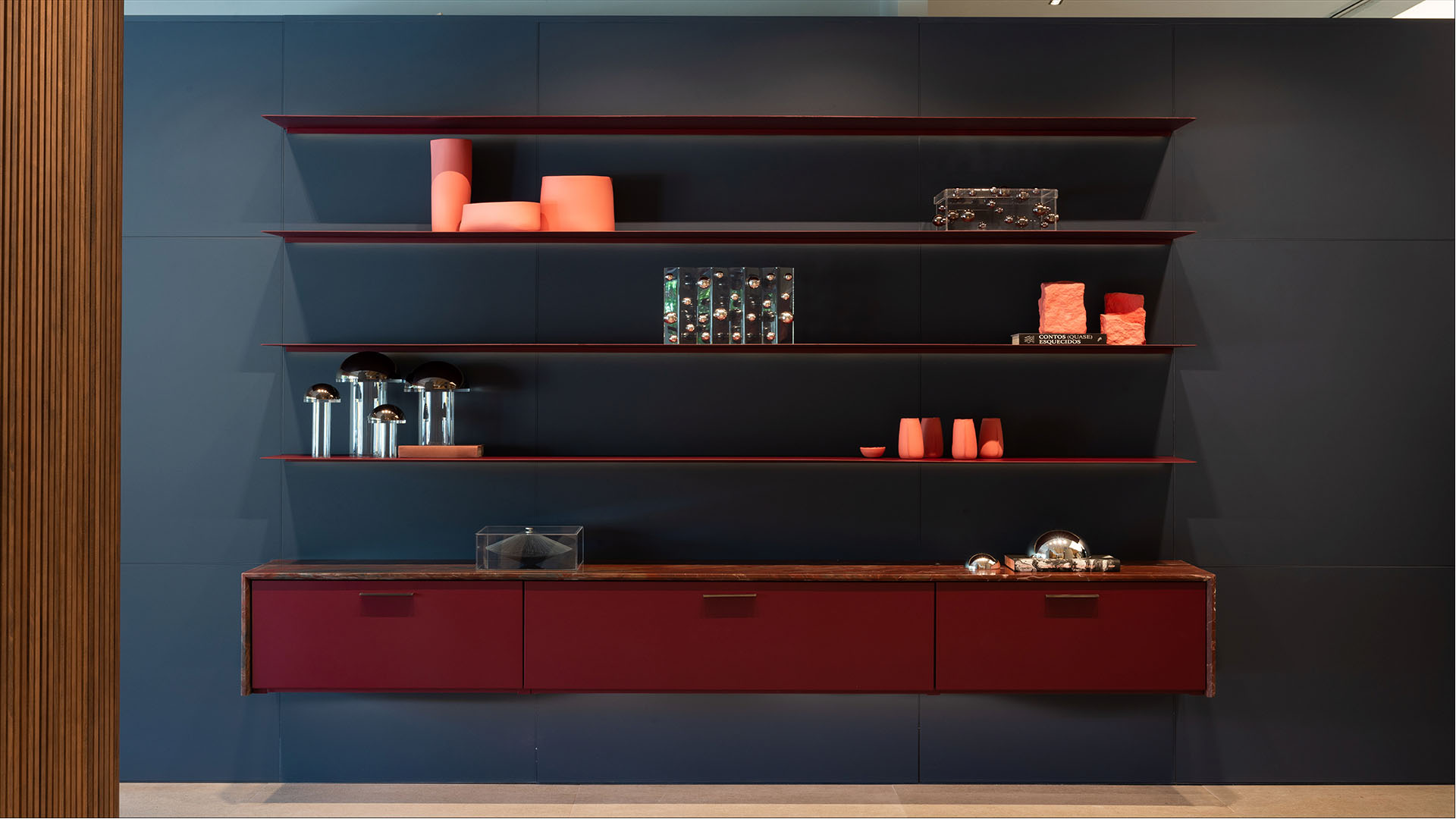
Sideboard cabinet by Ornare: built-in storage that owns the wall
A client in Palm Beach recently replaced a freestanding sideboard cabinet with an Ornare wall system. Same wall, same dining room, same function — storing serving dishes, wine, and table linens. The difference was immediate and hard to articulate at first. The room felt larger. The wall felt resolved. Nothing looked like it had been placed there. A few weeks later she figured out what had changed: the sideboard had occupied the wall. The Ornare system belonged to it.
That distinction — between furniture placed against a wall and storage designed for it — is what separates a conventional sideboard cabinet from an Ornare wall system. Both store things. Only one makes the room feel like it was designed rather than furnished.
What a sideboard cabinet needs to do in a modern dining or living room
The functional requirements of a sideboard cabinet haven’t changed much over the centuries: surface space for serving and display, closed storage for items that don’t need to be visible, and enough presence to anchor the wall it sits on. What has changed is the context. In today’s open-plan homes, the sideboard wall is often visible from the kitchen, the living area, and the entry simultaneously. A piece that looked fine in an enclosed dining room can feel inadequate — too small, too isolated — in a space where it’s seen from three different angles at once.
Ornare’s wall systems address this by treating the sideboard function as part of a larger wall composition rather than as a standalone piece.
The storage section that functions as a sideboard — closed cabinets at counter height, with a surface on top — sits within a system that can extend upward into shelving or display sections, outward to fill the full wall width, and laterally into adjacent zones. The result is a sideboard that doesn’t end where the unit ends. It ends where the wall ends.
Ornare collections for sideboard cabinet design: matching the system to the room
The choice of collection for a custom sideboard cabinet in an Ornare project is determined by the room’s character and the design language of the rest of the space. In dining rooms that lean formal — properties in Greenwich, Palm Beach, and the Hamptons where entertaining is a significant part of how the house is used — Timeless Bookshelf provides the right register: proportions that read as settled and permanent, finishes that communicate quality without announcing themselves, a wall composition that looks like it was designed by an architect rather than assembled from a catalog.
For living rooms and open-plan spaces where the sideboard wall also serves as a media wall or library, Wall System Living offers the flexibility to combine the sideboard function with open shelving, display niches, and closed upper storage in whatever proportion the room requires.
Square Wall takes the most architectural approach, with a three-dimensional modular surface that makes the sideboard section part of a larger textural composition — suited to rooms where the wall is meant to be a design statement rather than a background element. Shaker Wall Bar and Timeless Bar add the bar function directly into the sideboard composition, which in a dining room context means bottles, glassware, and bar accessories all have a place within the wall rather than on a separate piece of furniture nearby.
Sideboard surface and finish: the material decisions that define the piece
The top surface of a sideboard cabinet is permanently on display — set with objects during everyday use, used as a serving surface during meals, seen from across the room at every other moment. The material choice here has more impact on the overall character of the piece than the cabinet fronts below it, because it’s the surface at eye level and the one that interacts most directly with light, objects, and human contact.
Ornare works with a range of surface materials for the sideboard section of its wall systems: stone and marble for rooms that call for permanence and natural variation, lacquered surfaces in matte or gloss for cleaner, more contemporary compositions, and wood for warmth and material richness in spaces where the sideboard needs to feel approachable rather than formal. The relationship between the top surface and the cabinet fronts below it is part of the design conversation from the beginning — a marble top on matte lacquered lower cabinets reads differently from the same marble on a wood veneer base, and the right combination depends on the room, the light, and the other materials present in the space.
Ornare consultants at showroom locations in New York, Miami, Dallas, Los Angeles, and Houston work through these material relationships with physical samples rather than digital representations, which is the only reliable way to evaluate a finish combination at full scale before committing to it.
Integrating the sideboard cabinet into an open-plan living space
In homes where the dining area opens directly into the living room — which describes most contemporary residential projects in the US market — the sideboard cabinet wall is visible from the living area as often as it is from the dining table. This changes its design requirements significantly. A piece that reads well from eight feet away at the dining table also needs to hold up visually from twenty feet away on the sofa, and from the entry, and from the kitchen. Scale, proportion, and material coherence with the rest of the open plan become critical in a way they aren’t in an enclosed dining room.
Ornare addresses this by designing the sideboard wall as part of the larger open-plan composition rather than as a dining room decision made in isolation. The finish of the sideboard cabinets is selected in relation to the kitchen cabinetry visible from the same sightline. The height and depth of the wall system are calibrated to the room proportions rather than to standard furniture dimensions. And the transition between the dining storage zone and adjacent living room elements — shelving, media storage, display sections — is resolved as a continuous design rather than as a junction between two separate pieces of furniture.
For anyone working on a home in Washington D.C., New Jersey, or the Hamptons where the dining and living areas share a single open space, this integrated approach to sideboard cabinet design is worth discussing at the beginning of the project rather than treating the sideboard as a furniture purchase made after everything else is decided.