Kitchen & dining furniture by Ornare: designing two rooms as one
The open-plan home created a problem that most kitchen and dining furniture on the market still hasn’t solved: the kitchen and the dining area share the same space, but they’re furnished as if they don’t. The kitchen cabinets come from one source, the dining storage from another, and the two end up in the same room speaking different design languages. The result is a space that functions adequately but never quite coheres — visually busy, materially inconsistent, and always just slightly short of resolved.
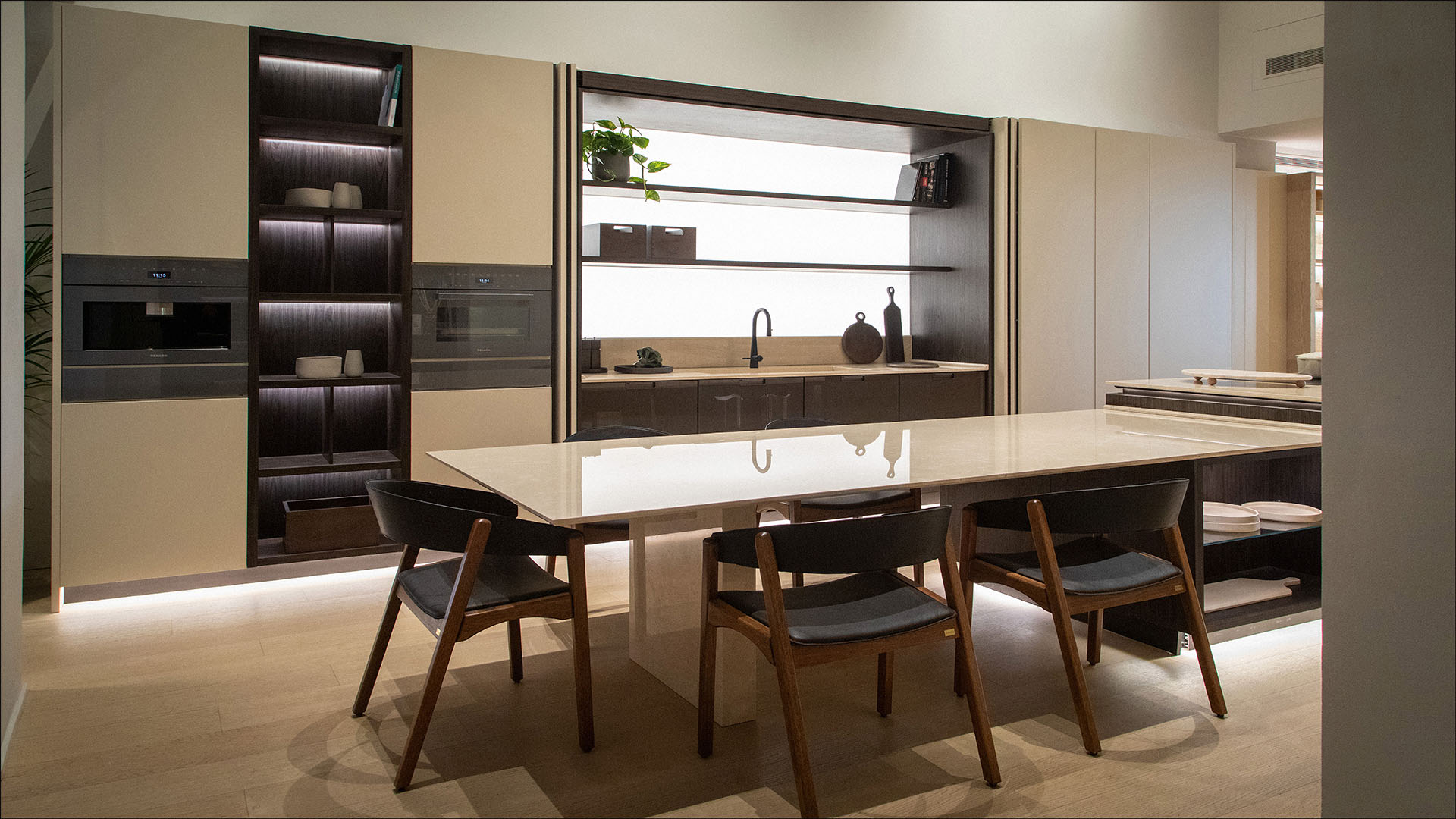
Ornare approaches the kitchen and dining zone as a single design problem. The collections that define the kitchen cabinets are the same collections that inform the dining storage, the bar area, and the wall systems that run from the cooking zone into the living and dining space. Same materials, same finishes, same proportions, same production standards. In a well-executed Ornare project, you can’t tell where the kitchen ends and the dining area begins — because the design never treated them as separate.
Kitchen furniture by Ornare: cabinets built to the room, not to a catalog
The foundation of any kitchen and dining furniture project at Ornare is the kitchen cabinetry itself — and the first distinction from standard kitchen furniture is that Ornare builds to the actual dimensions of the space rather than to standard module sizes. This means no filler strips at the ends of cabinet runs, no upper cabinets that stop short of the ceiling, no corner solutions borrowed from a generic catalog. Every cabinet is the right width for the wall it occupies, the right height for the ceiling above it, and the right depth for the use it serves.
The kitchen collections span a range wide enough to address genuinely different aesthetic positions. Minimal produces cabinets with no visible hardware and continuous surface planes — kitchen furniture that reads as architecture rather than as furniture. Timeless works with proportions that feel settled and enduring, producing a kitchen that looks considered rather than trendy. Round introduces curved edges and corners that soften the geometric strictness of a modern kitchen without compromising its cleanliness.
Colette, Breeze, Sky, Shaker, Ikigai, Slatted, Stripe, Stow, Infinite, and Wall System each add further positions across this spectrum, from warmly textured to architecturally precise. The collection choice is informed by the room as much as by preference — the ceiling height, the light conditions, the relationship to the dining and living areas all affect which kitchen furniture language works best in a specific space.
Dining storage furniture: wall systems that connect kitchen and dining seamlessly
The dining side of kitchen and dining furniture is where most projects lose coherence. The kitchen has a clear design logic — cabinets, countertops, appliances — but the dining area often ends up with a sideboard or buffet that was chosen separately, in a different finish, from a different design family. In an open-plan space where both zones are always simultaneously visible, this inconsistency is difficult to overlook.
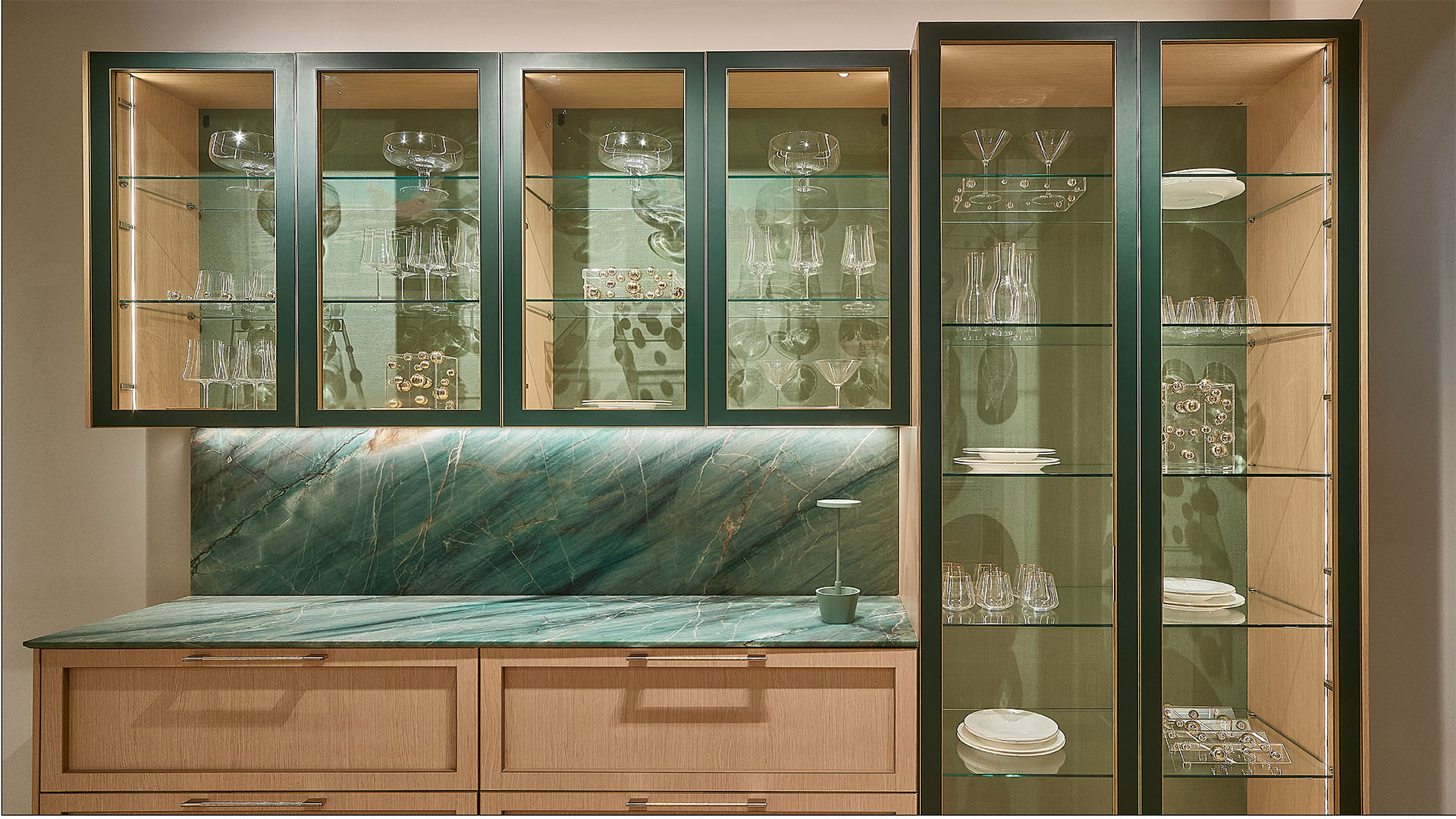
Ornare’s Bookshelves & Multimedia collections — Wall System Living, Timeless Bookshelf, Timeless Bar, Shaker Wall Bar, Square Wall, and Ikigai Bookshelf — provide the dining storage layer within the same design system as the kitchen. A wall that transitions from kitchen upper cabinets into a dining buffet section and then into a living room bookshelf, all in coordinated finishes and proportions, reads as a single architectural composition rather than a sequence of furniture decisions.
The bar function — bottles, glassware, bar accessories — integrates directly into the wall through the Timeless Bar or Shaker Wall Bar, eliminating the need for a separate bar cart or cabinet that inevitably looks out of place.
For clients designing homes in the Hamptons, Greenwich, Palm Beach, or Miami Design District — markets where the kitchen and dining area are frequently the most important entertaining spaces in the house — this level of integration between kitchen and dining furniture is often what separates a project that photographs well from one that actually lives well.
The island as the link between kitchen and dining furniture
In an open-plan home, the kitchen island is frequently the piece of kitchen and dining furniture that does the most work. It’s a prep surface on the kitchen side, a dining or snacking surface on the living side, and a visual anchor that defines the boundary between the two zones without closing them off from each other. When the island is designed as part of the kitchen system — same countertop material, same cabinet finish, consistent proportions — it reinforces the coherence of the entire open-plan composition.
Ornare designs islands as integral components of the kitchen rather than as freestanding additions. The island countertop is often the material statement of the entire space: a slab of marble, stone, or solid wood that runs the full length of the unit and extends on the dining side to accommodate seating. The seating overhang is calibrated to the actual stools or chairs being used — not to a generic clearance standard — which means the ergonomics of sitting at the island are correct from the first day of use. The storage configuration below the countertop is organized for the specific items that will be accessed from that position, whether that’s cooking equipment on the kitchen side or serving pieces on the dining side.
Visiting Ornare showrooms to see kitchen and dining furniture together
The coherence between kitchen and dining furniture in an Ornare project is something that reads clearly in person and is almost impossible to convey in a photograph. Walking through a space where the kitchen cabinets, the island, the dining buffet wall, and the living room shelving all belong to the same design family — in the same finish, with the same hardware, at consistent proportions — produces a spatial impression that influences every subsequent design decision.
Ornare showrooms in New York at the A&D Building on East 58th Street, in Dallas’s Design District, in Houston, in Los Angeles, and in New Jersey at the Paramus Design Center all have installations where this relationship between kitchen and dining can be experienced at full scale, with real materials and real lighting conditions, before any commitments are made.