Closet designs by Ornare: custom solutions for every space
Renovating a bedroom in a Dallas home, an architect recently faced a common problem: a long, narrow closet space with an awkward structural column interrupting the back wall. Standard modular systems couldn’t accommodate it. Custom millwork quotes came back too expensive and too slow. The solution was an Ornare closet design that incorporated the column as a natural divider between two functional zones — hanging on one side, shelving and drawers on the other — turning a constraint into an organizing principle. The column is still there. Nobody notices it anymore.
This is what good closet design actually looks like in practice: not a catalog layout applied to a space, but a response to the specific geometry, specific storage needs, and specific habits of the person using it. Ornare has been developing custom closet systems since 1986, and every project starts from the same point — the real room, with its real dimensions and real complications.
Closet design by room type: how the space determines the approach
Not all closet designs face the same constraints or serve the same purpose, and the right approach depends heavily on the type of space being designed. A reach-in closet in a New York apartment — typically narrow, often with a single door opening — needs a completely different solution than a walk-in closet in a Houston home or a full dressing room in a Hamptons property. Ornare designs across all three contexts, and the collection chosen for each is informed by the room as much as by aesthetic preference.
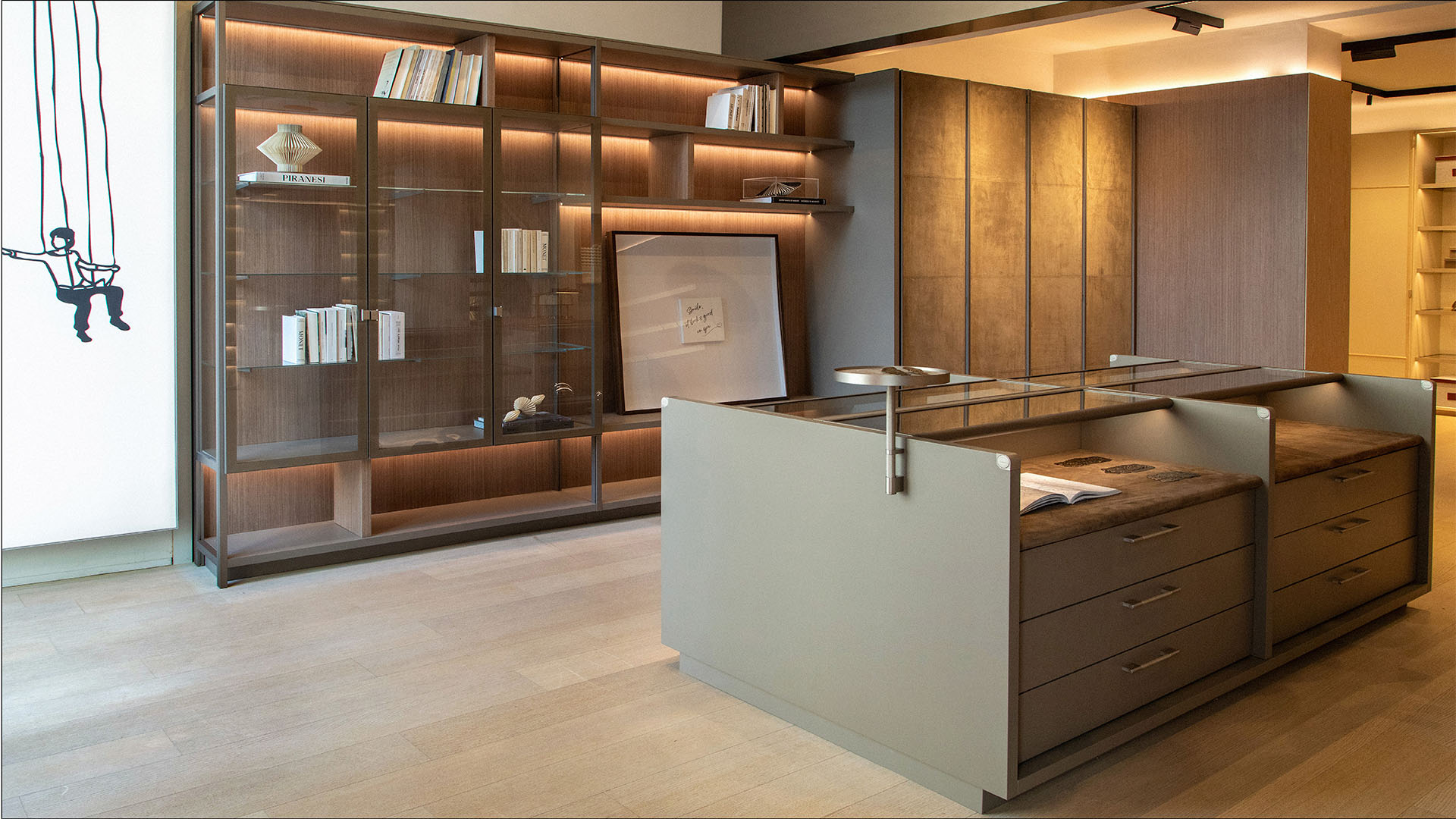
For reach-in configurations, the priority is extracting maximum storage from a limited footprint. Double-hang sections, shallow shelving for folded items, and door-mounted storage can turn a four-foot opening into a surprisingly capable wardrobe. For walk-in closets, the design question shifts to circulation: how the aisle width, the arrangement of hanging versus shelving sections, and the placement of drawers affects the daily experience of using the space. For full dressing rooms, the design can expand to include islands, vanity areas, seating, and dedicated display sections — a completely different typology that Ornare addresses through collections like Timeless Island, Vanity, and the 270° system, which uses every wall in the room including corners that standard systems typically sacrifice.
Ornare closet collections: matching the design to the wardrobe and the room
The closet catalog at Ornare covers a range wide enough that the collection choice is a genuine design decision rather than a cosmetic one. Timeless Closet, Timeless Island, and Timeless Beauty form a family oriented toward formal elegance — proportions and finishes that read as considered and permanent, suited to primary bedrooms where the closet is a significant design investment. Wall System Bedroom and Wall System Closet offer the most configurability: modular systems that can combine hanging, shelving, drawers, and display elements in any proportion, which makes them the right choice when the storage requirements are complex or when the room has unusual geometry.
For clients who want the closet to disappear into the architecture — to read as a wall rather than as a piece of furniture — Infinite and Essential work particularly well, with continuous vertical panels that create a flush, uninterrupted surface. For those who want the closet to be a room-defining feature, Crystal Case offers glass-front panels that transform the wardrobe into a showcase, and Air creates a visually light composition with an almost structural quality. Orchis, Australe, Divisio, Lys, Shaker, Stripe, Stilo, and Ikigai each add further positions across the spectrum from warm and craft-oriented to cool and architectural.
Interior organization in custom closet designs: the layout that makes mornings easier
The interior organization of a custom closet is where the design either delivers on its promise or falls short of it. A closet that looks right but requires constant searching, rearranging, or workarounds to use daily has failed at its primary function regardless of how good it looks. Ornare designs interiors from the contents out — starting with what needs to be stored, then configuring the hanging heights, drawer depths, shelf spacings, and special sections accordingly.
Double-hang sections for shorter garments effectively double the hanging capacity within the same floor-to-ceiling height, which matters significantly in closets where space is limited. Dedicated sections for shoes — at the right depth and height for the actual shoe collection — prevent the stacking and crowding that makes shoe storage frustrating in generic designs. Drawer interiors with custom dividers keep small items organized without requiring secondary organizers purchased separately.
The Vanity Island and Little Luxuries complements add a layer of luxury organization — padded trays, velvet-lined compartments, dedicated jewelry and accessory storage — that transforms a functional closet into a full dressing experience. Ornare showrooms in New York, Miami, and Los Angeles have closet installations where these interior details can be examined in full scale, which is the most effective way to calibrate organizational decisions before they’re built.
Closet design and lighting: the specification that most people get wrong
Lighting is the most frequently underspecified element in closet design, and it’s the one that has the most impact on how the space functions day to day. A closet with inadequate lighting is a closet where dark colors get confused, where the detail on a fabric isn’t visible until you’re in a different room, where the back corners of every shelf are effectively inaccessible. Good closet lighting illuminates the interior of each hanging section and each shelf zone individually — not just the center of the room from a single overhead fixture.
Ornare integrates LED lighting into its closet systems as part of the design: strips under shelves, inside hanging sections, within drawer units, and along the perimeter of the space. The result is a closet where every section is equally visible, where colors read accurately, and where the room feels finished rather than functional.
For anyone working on a closet project in Greenwich, Palm Beach, the Hamptons, or Washington D.C. — markets where the primary bedroom closet is a significant investment — the lighting specification is worth discussing at the design stage rather than addressing it as an afterthought after the cabinetry is already in.