Kitchen accessory holder by Ornare: when organization becomes part of the design
Most kitchen accessory holders are bought to solve a problem that already exists: the countertop is cluttered, the paper towels have no home, the cooking utensils are spread across three different drawers. The accessory comes in, solves the immediate issue, and sits there looking like exactly what it is — a practical fix that wasn’t planned for. The result is a kitchen where the organizational layer is visually separate from the design layer, and where the two coexist rather than work together.
Ornare approaches kitchen accessories from the opposite direction. The Tools and Emporium collections are designed as integral components of the kitchen system — same design language, same materials standards, same attention to detail as the cabinets, countertops, and hardware around them. They’re not add-ons. They’re part of the kitchen from the beginning, which is why they look like they belong there.
The Tools collection: a kitchen accessory holder system built around a single elegant bar
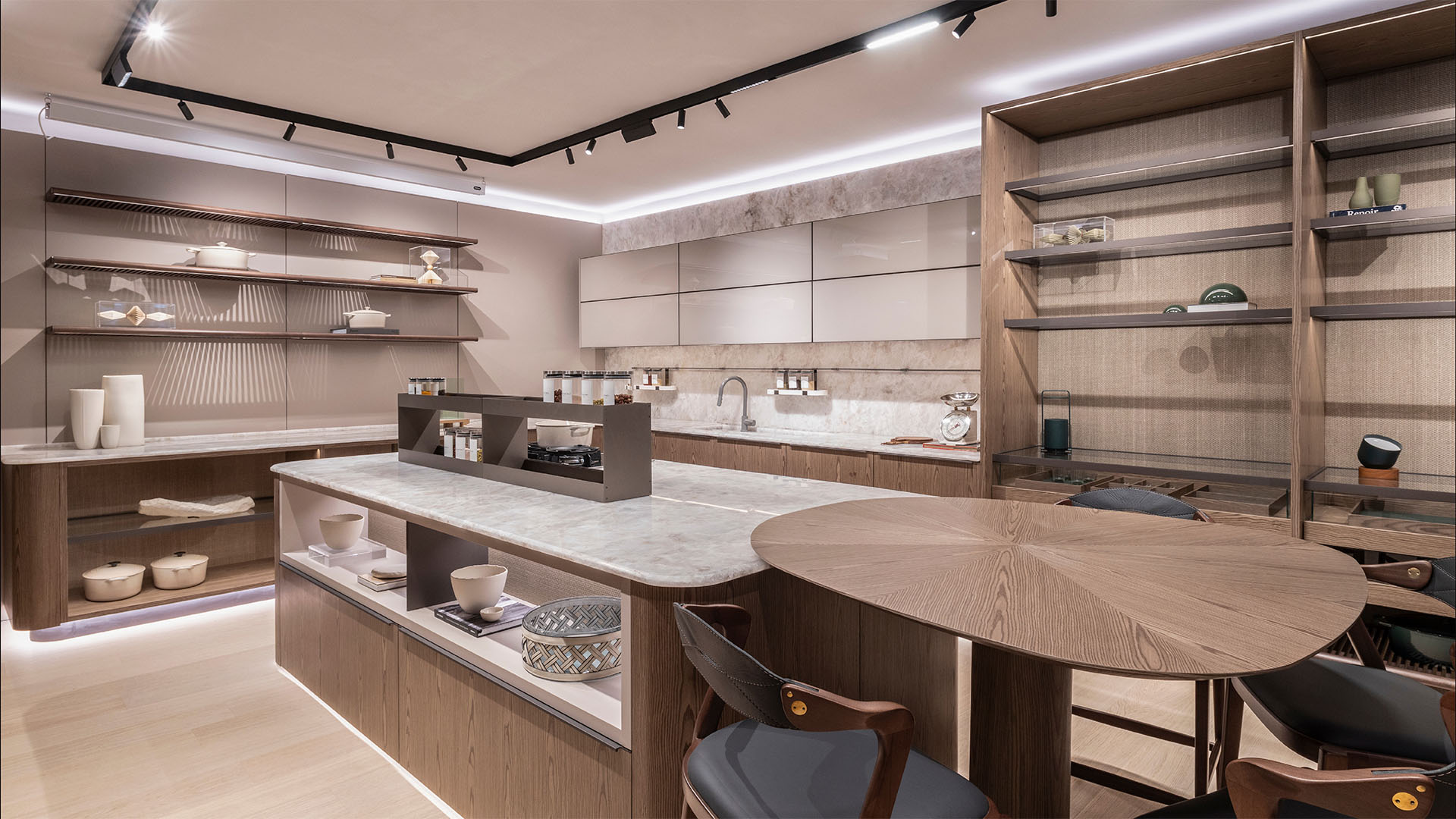
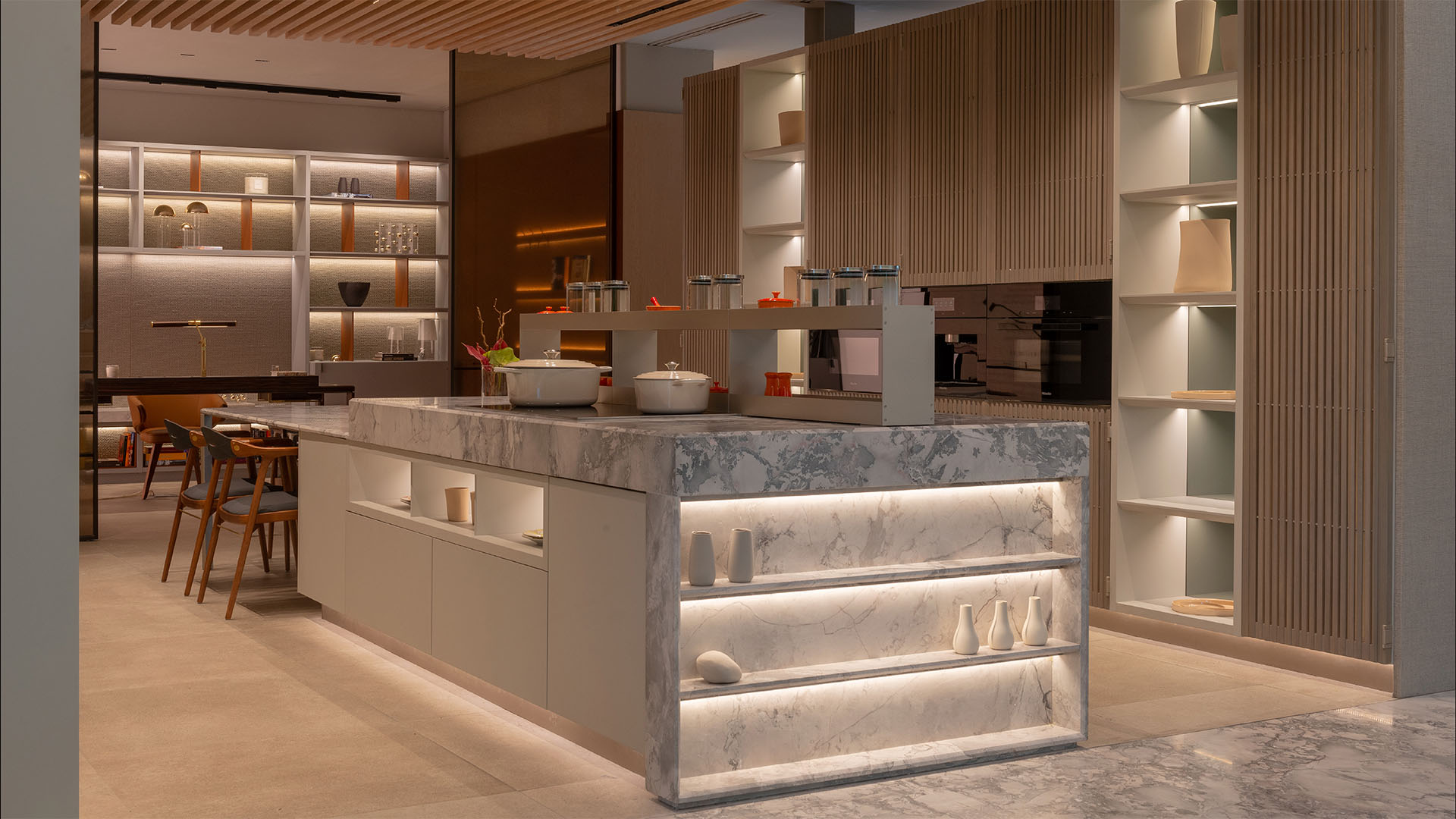
Tools is the most direct answer to the kitchen accessory holder question in the Ornare catalog. The system is built around a metal bar mounted above the work surface — elegant, minimal, precisely proportioned — from which a series of containers and holders suspend on sliding metal hooks. The hooks move freely along the bar, which means the configuration can be adjusted as needs change without any reinstallation. Everything slides into a new position in seconds.
The containers themselves are made in Corian, a material that brings a quality of surface and a consistency of finish that generic kitchen accessories rarely achieve. Available in rectangular and round versions, they’re designed to hold the items that typically end up on the countertop or buried in drawers: utensils, small tools, condiments, anything that needs to be within reach during cooking. A paper towel holder completes the line, designed in the same visual language so the entire bar reads as a composed system rather than a collection of disparate objects. The whole thing was designed by Ricardo Bello Dias in collaboration with Studio Ornare — the same design team responsible for the bathroom collections and several of the kitchen lines — which is why it integrates so naturally into the broader Ornare kitchen environment.
In practical terms, a Tools bar positioned above the work surface does something that drawer storage can’t: it keeps frequently used items visible and accessible without requiring any surface space. Everything is at eye level, retrievable in one motion, returned just as easily. In a kitchen where the countertop is a premium surface — marble, stone, or a high-specification composite — keeping it clear of the objects that inevitably accumulate during cooking is not a minor consideration. Tools solves that without creating visual noise.
The Emporium collection: modular tray systems that integrate directly into the wall
Emporium takes a different approach to kitchen organization. Rather than a suspended bar system, it uses a series of containers — trays, in the collection’s own language — designed to integrate directly into the Ornare Wall System. The trays slot into dedicated supports within the wall unit, creating modular storage that reads as part of the architecture rather than as something attached to it.
The practical advantage of this integration is significant: the containers become part of the cabinet composition, with no visual separation between the storage system and the wall it sits within. When the kitchen is not in use, the wall reads as a continuous designed surface. When it’s being used, the trays are immediately accessible — and because they’re easily removable from their supports, they can be carried to the countertop, the island, or the table without decanting their contents first. It’s a detail that sounds minor until you’re actually cooking and realize how often you move things from one surface to another during preparation.
The Emporium collection was also designed by Ricardo Bello Dias with Studio Ornare, and the relationship between the tray system and the Wall System it integrates with is evident in the way the proportions and materials align. This isn’t coincidental — it’s the result of designing the accessory and the cabinet as parts of the same project.
Why kitchen accessories matter as much as the cabinets they live next to
There’s a tendency in kitchen design to treat the accessory layer as a secondary concern — something to figure out after the main decisions have been made. The problem with this approach is that accessories are among the most frequently touched, most constantly visible elements in any kitchen. A paper towel holder that looks out of place, a utensil rack that doesn’t match the hardware finish, containers that sit on the counter because there’s no integrated solution for them — these details accumulate into an overall impression that the kitchen, however well-designed in its main components, wasn’t fully thought through.
Ornare’s Accessories & Complements catalog exists precisely to close this gap. Tools and Emporium are the kitchen-specific solutions, but the broader collection includes the Vanity Tray for closet and bathroom contexts, the Timeless Edge Desk for home office integration within the Timeless system, and the Fancy collection for additional organizational needs. The common thread is that each piece is designed as part of the Ornare ecosystem rather than as a standalone product — which means the design language, the material standards, and the production quality are consistent across every element of a project, from the cabinet boxes to the smallest container on the wall bar.
Seeing Ornare kitchen accessories in context: what a showroom visit makes clear
The Tools and Emporium systems are the kind of products that read very differently in person than they do in photographs. The quality of the Corian surface in the Tools containers, the precision of the sliding hooks on the bar, the way the Emporium trays release from and return to their wall supports — these are tactile and mechanical qualities that a product image can suggest but not convey.
Ornare showrooms across the US — in New York at the A&D Building, in Miami’s Design District, in Dallas, Los Angeles, Houston, and elsewhere — have kitchen installations where these accessories are displayed in context, as part of complete kitchen compositions rather than in isolation. Seeing them alongside the cabinets, countertops, and hardware they’re designed to work with is the most reliable way to understand how they function as a system and whether that system fits the kitchen being planned.