Modern bookshelf design: six approaches that go beyond standard shelving
Standard shelving has a fixed premise: horizontal surfaces at regular intervals, vertical panels at regular widths, everything the same depth from front to back. It works. It holds books. It’s been working for a very long time. What it doesn’t do is contribute anything to the room beyond storage — it doesn’t engage with the architecture, respond to the light, or produce a visual result that the room couldn’t have achieved without it.
The six Ornare Bookshelves & Multimedia collections each start from a different premise. Not different aesthetics applied to the same structure, but different ideas about what a modern bookshelf should do in a room. Understanding what distinguishes each premise — and which premise is right for a specific room — is the actual design question that collection selection answers.
Premise one: the wall as a three-dimensional surface
Square Wall begins with the observation that a flat bookshelf is one plane, and a wall can be more than one plane. The system uses modules of varying depths — some sections projecting further from the wall, others recessed — to create a three-dimensional composition across the full wall surface. The result isn’t a bookshelf in front of a wall. It’s a wall that has become a bookshelf, with depth variation producing shadow and relief that change as light moves through the room.
This premise produces a specific visual effect that no other approach replicates: the bookshelf reads differently at different times of day. Morning light from an east-facing window reads across the surface at a low angle, emphasizing the shadow lines between modules of different depths. Afternoon light from above flattens the composition. Evening artificial light, directed from below or from the side, reverses the shadow pattern. A room in Dallas or Houston with strong directional light for significant portions of the day has a Square Wall installation that’s effectively a different surface at 8am, 2pm, and 8pm.
Premise two: transparency as the design position
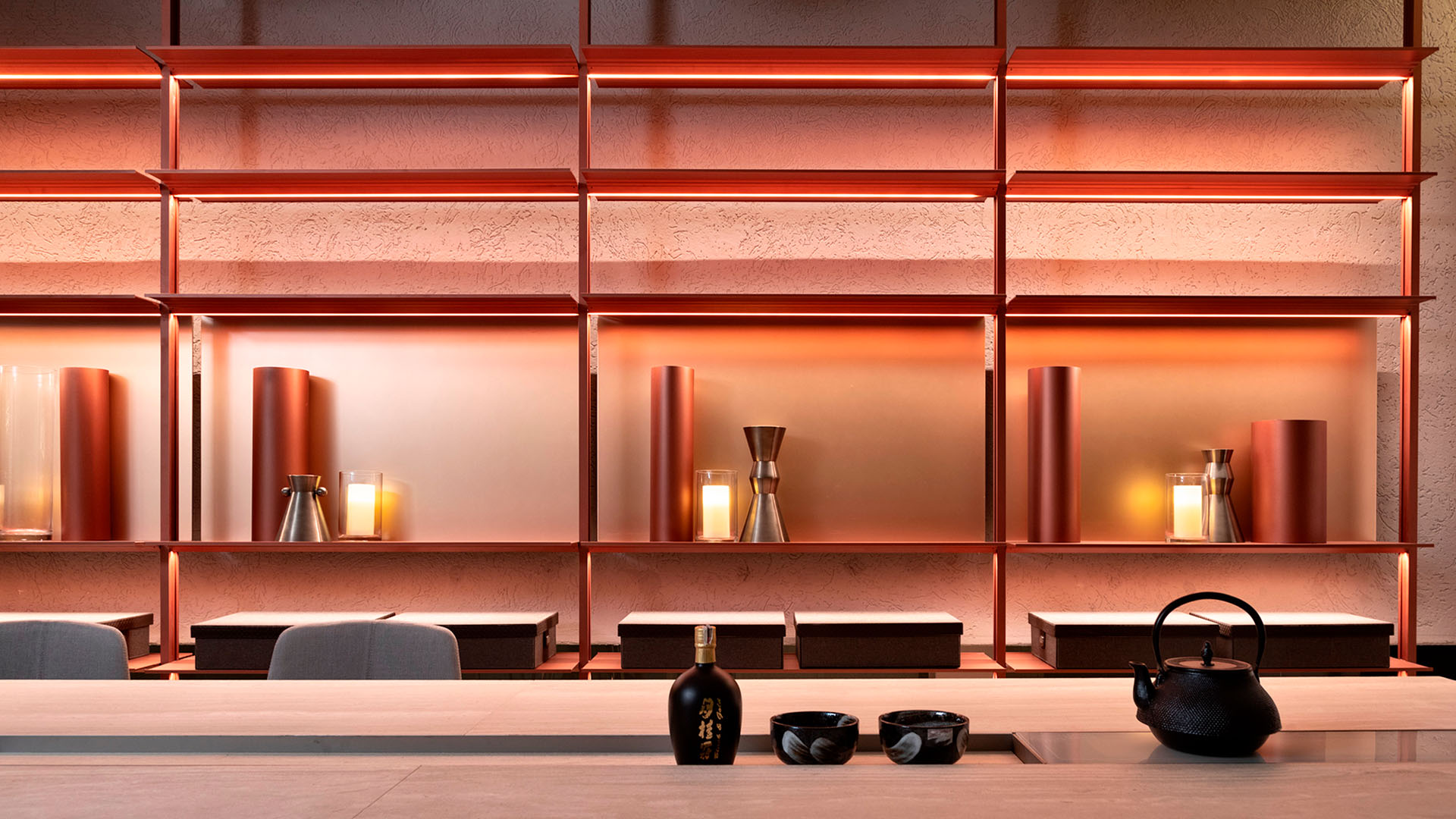
Ikigai Bookshelf begins from the opposite position. Where Square Wall adds depth and mass to the wall, Ikigai removes visual weight. The exposed metal frame — precisely engineered, geometrically consistent, visually light — organizes the shelving into a grid without covering the wall behind it. The background remains partially visible through the shelving system, which means the bookshelf reads as a layer in the room rather than as a surface.
This transparency is a design position, not a constraint. It works best when the background the shelving is placed against has something to contribute: a painted wall in a strong color, a textured plaster surface, an architectural feature that the transparency reveals rather than hides. In a room in Los Angeles or Miami where the architecture behind the bookcase wall has character worth preserving, Ikigai makes the bookshelf and the wall collaborative rather than the bookshelf obscuring the wall entirely.
Premise three: permanence as the visual quality
Timeless Bookshelf starts from a different design problem: how to make a modern bookshelf that doesn’t date. Its proportions are calibrated to feel settled rather than current — not referencing a historical style, but not dependent on a contemporary trend either. The result is a bookshelf that looks correct in a room ten years from now the way it looks correct in the room today.
This is a more specific achievement than it sounds. Most contemporary design is contemporary in ways that reveal themselves over time — design decisions that were current when the piece was specified and that begin to read as period-specific as the aesthetic context shifts. Timeless Bookshelf avoids this by building its design logic on proportion and material quality rather than on stylistic gesture. In a primary residence in Greenwich, Palm Beach, or the Hamptons where the interior is expected to remain relevant through multiple cycles of design fashion, permanence is a practical requirement, not just an aesthetic preference.
Premise four: maximum configurability for complex walls
Wall System Living starts from the premise that some walls need to do too many things for any single design language to handle. Books, media equipment, bar storage, closed cabinets, display niches — assembling these into a coherent wall composition requires a system that can adjust to whatever the wall requires rather than one with a fixed design identity.
Wall System Living is the collection where configurability is the design premise. The module types, widths, heights, depths, and finishes are all variable, which means the system can produce a bookshelf-only wall, a media-storage wall, a bar wall, or any combination. The visual coherence comes from the finish and the proportional discipline of the design rather than from a fixed formal identity. For a living room in New York where the wall needs to simultaneously house a television, a bar section, bookshelves, and closed storage for miscellaneous items, Wall System Living handles the brief that would require compromises from any of the other collections.
Premise five and six: the bar function as a first-class design element
Shaker Wall Bar and Timeless Bar share a premise that distinguishes them from the other four collections: the bar function isn’t secondary to the bookshelf function. Both systems treat wine storage, glassware organization, and bar accessories as primary design considerations rather than additions to a shelving system.
The difference between the two is the design language through which this premise is expressed. Shaker Wall Bar uses panel detailing that references a craft tradition — not literally reproducing it, but drawing on its vocabulary of precise joinery and material quality to produce a bar wall that feels warm and considered. It suits rooms that mix contemporary and traditional references, or interiors where the design language tends toward the residential rather than the architectural. Timeless Bar applies the same bar-first premise with the Timeless family’s settled, formal proportions. It reads as more considered for rooms that skew toward elegance and formality — a dining room in a Palm Beach home, a library in a Washington D.C. townhouse — where the bar wall is a feature of a room used for significant entertaining rather than casual daily use.