Display cabinet design: choosing depth, shelving and position for the pieces you want to show
Most display cabinets are too deep. It sounds like a minor detail, but it’s the reason so many collections end up looking crowded: when a shelf is 18 inches deep, objects get arranged in two or three rows, the ones in front hide the ones behind, and the cabinet turns into storage with glass doors. Good display cabinet design works the other way around. It starts from the objects, decides how they should be seen, and only then sets the depth, the shelves and the position in the room.
Display cabinet depth: matching the cabinet to what it holds
The right depth depends on the collection. Glassware, stemware and small ceramics read best on shelves 10 to 12 inches deep, where they stand in a single row and every piece is visible. Plates displayed upright on a groove or rail need about 12 to 14 inches. Vases, bowls and sculptural objects usually ask for 14 to 16 inches, enough to leave space around each piece. Large art books displayed flat, handbags or oversized ceramics are the main reasons to go deeper, to 16 or 18 inches.
When a collection mixes different objects, it’s often better to vary depth within the same composition than to choose the deepest measurement for everything. A tall unit can be shallower at eye level, where small pieces are seen up close, and deeper in the lower section, where larger items or closed storage sit. Shallow display cabinets also have a practical advantage: they take less floor space, which matters in dining rooms and hallways where clearance is tight.
Shelving in display cabinets: spacing, materials and load
Shelves decide how light moves through the cabinet and how much it can hold. The spacing between them should follow the tallest objects plus 2 to 3 inches of air above, typically 10 to 14 inches for glassware and ceramics and 14 to 18 inches for vases and sculptures. Adjustable shelf pins every 1 to 2 inches make it possible to rearrange the cabinet as the collection grows.
Glass shelves
Glass shelves let light from above reach every level, which is why they’re common in display cabinets with glass doors and shelves. Tempered glass of 1/4 inch works for light objects on spans of up to about 24 to 30 inches; heavier pieces such as stoneware, stacked plates or books need 3/8-inch glass or a shorter span. Polished edges and discreet supports keep the shelves almost invisible. Low-iron glass is worth considering for white or pale collections: standard glass has a slight green tint that becomes visible when several shelves are stacked, while low-iron glass stays clear and keeps colors true from top to bottom.
Wood and metal shelves
Wood shelves bring warmth and carry more weight, and they’re the natural choice when the cabinet holds books or heavy ceramics. They block light, though, so each shelf needs its own lighting. Slim metal shelves combine strength and a lighter profile, suiting contemporary interiors and longer spans.
Where to place a glass display cabinet in the room
Position decides whether a collection is noticed. The most effective band for display is between roughly 48 and 66 inches from the floor, the eye level of a standing adult, so the finest pieces should go there, with heavier or less important items below. A glass display cabinet placed on the first wall visible from the entrance, or at the end of a sightline through a doorway, gets attention without needing to be large.
Light from windows is the main thing to avoid. Direct sun fades fabrics, labels, paper and some glazes, and heats the inside of a closed cabinet, so north-facing walls or walls perpendicular to the windows are safer. In open-plan homes, a two-sided cabinet can work as a room divider, displaying objects on both sides while separating the dining area from the living room. Whatever the position, a tall cabinet must be securely anchored to the wall: a loaded display cabinet with glass doors is top-heavy, and anchoring is essential in homes with children.
China display cabinet or open display: deciding how much to protect
A closed china display cabinet keeps porcelain, crystal and silver free of dust and handling, which means the pieces stay presentable without constant cleaning. Open shelving offers more immediate access and a lighter look, but in practice it works best for robust objects that are used and handled anyway, such as everyday glassware or books.
Lighting completes either choice. Warm light, around 2700 to 3000 K, suits most collections, but color rendering matters as much as color temperature: LED strips with a high color rendering index, 90 or above, show the real colors of glazes, fabrics and wood. Lighting from the front edge of each shelf, aimed back toward the objects, avoids glare on the glass doors.
How Ornare designs display cabinets around what you collect
Ornare designs display storage to the measurements of the room, which makes it possible to set depth, shelf spacing and lighting around the actual collection instead of a standard module. The right direction depends on what the cabinet will hold.
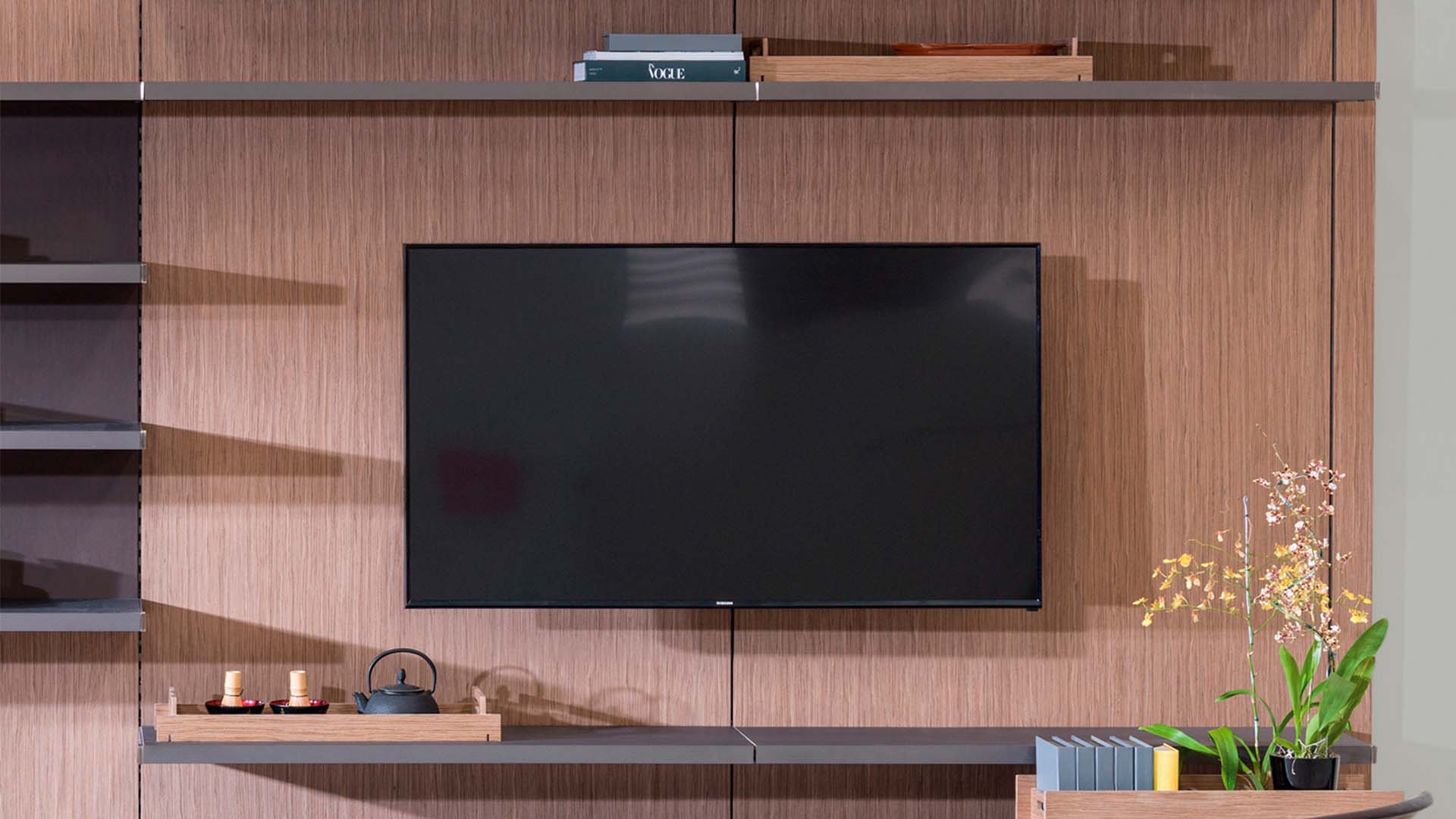
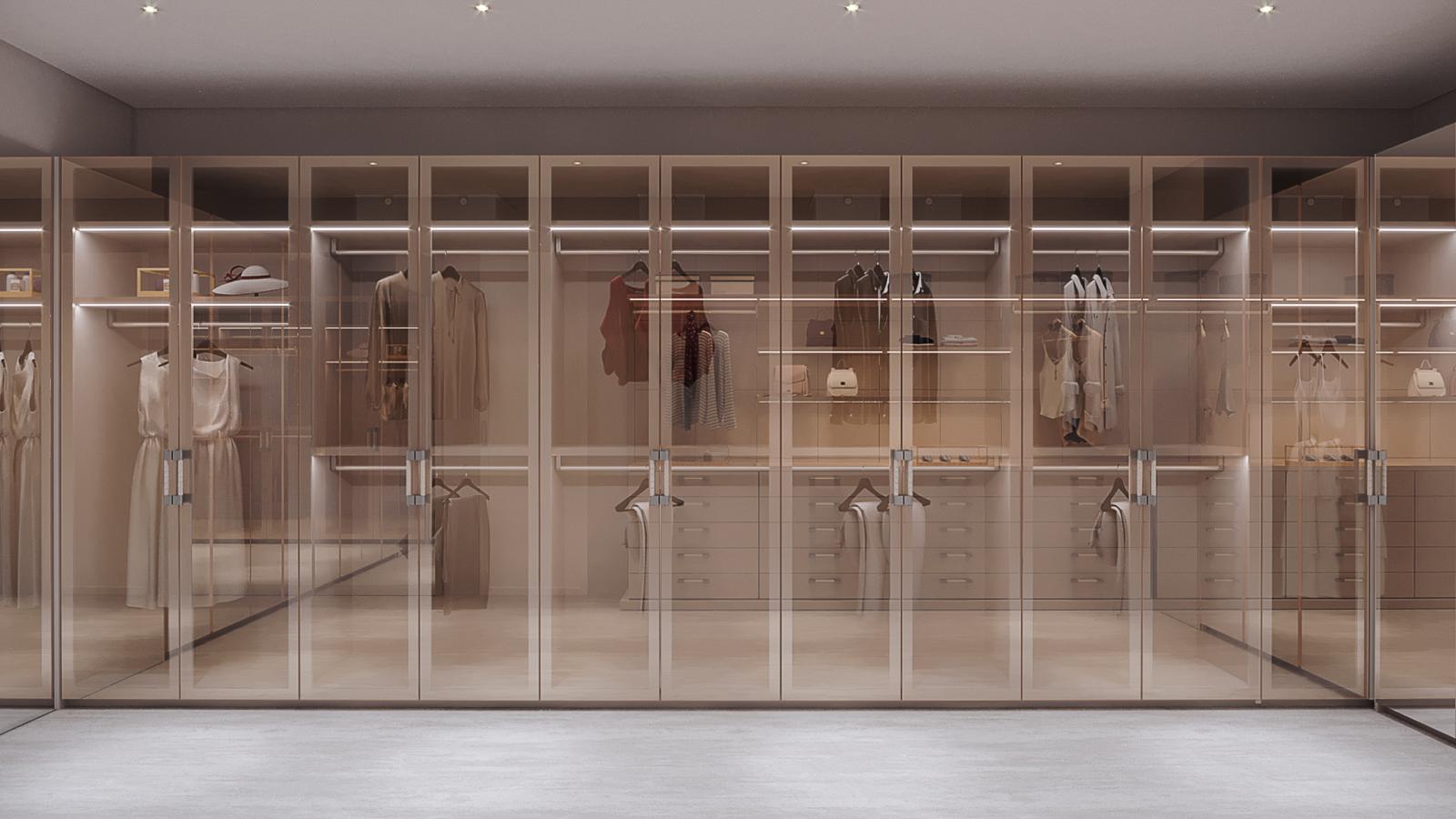
For porcelain, bowls and collectibles in a classic contemporary setting, Ornare’s Colette collection includes a crystal cabinet with interior lighting designed precisely for these pieces. For objects, accessories and fashion pieces that should be seen as in a boutique, Crystal Case uses glass and aluminum profiles, shelves with integrated lighting and concealed hinges, with side panels that can be left open or closed with glass. And for mixed collections of books, art and objects within a larger wall, Ikigai combines slim vertical metal profiles with LED-lit shelves that can be closed with wooden sliding panels.
One last detail changes the result more than most people expect: the color of the back panel. A dark back makes white porcelain, crystal and silver stand out sharply, while a lighter or wood-toned back suits dark ceramics, bronze and wooden objects. Choosing the back for the collection, rather than matching it to the cabinet exterior, is often what makes a display cabinet look curated.