Kitchen buffet cabinet: how a custom wall system does the job better
The buffet cabinet is one of those pieces that every well-designed kitchen or dining space eventually needs and almost nobody plans for from the beginning. It shows up late in the project — after the kitchen is done, after the dining table is in place — as a solution to a storage problem that wasn’t anticipated: where do the serving dishes go, where does the extra glassware live, where is there a surface to set things down when dinner is being served.
The kitchen buffet cabinet bought at that stage is almost always a compromise: the right approximate size, in a finish that roughly matches, positioned against a wall that wasn’t designed to receive it.
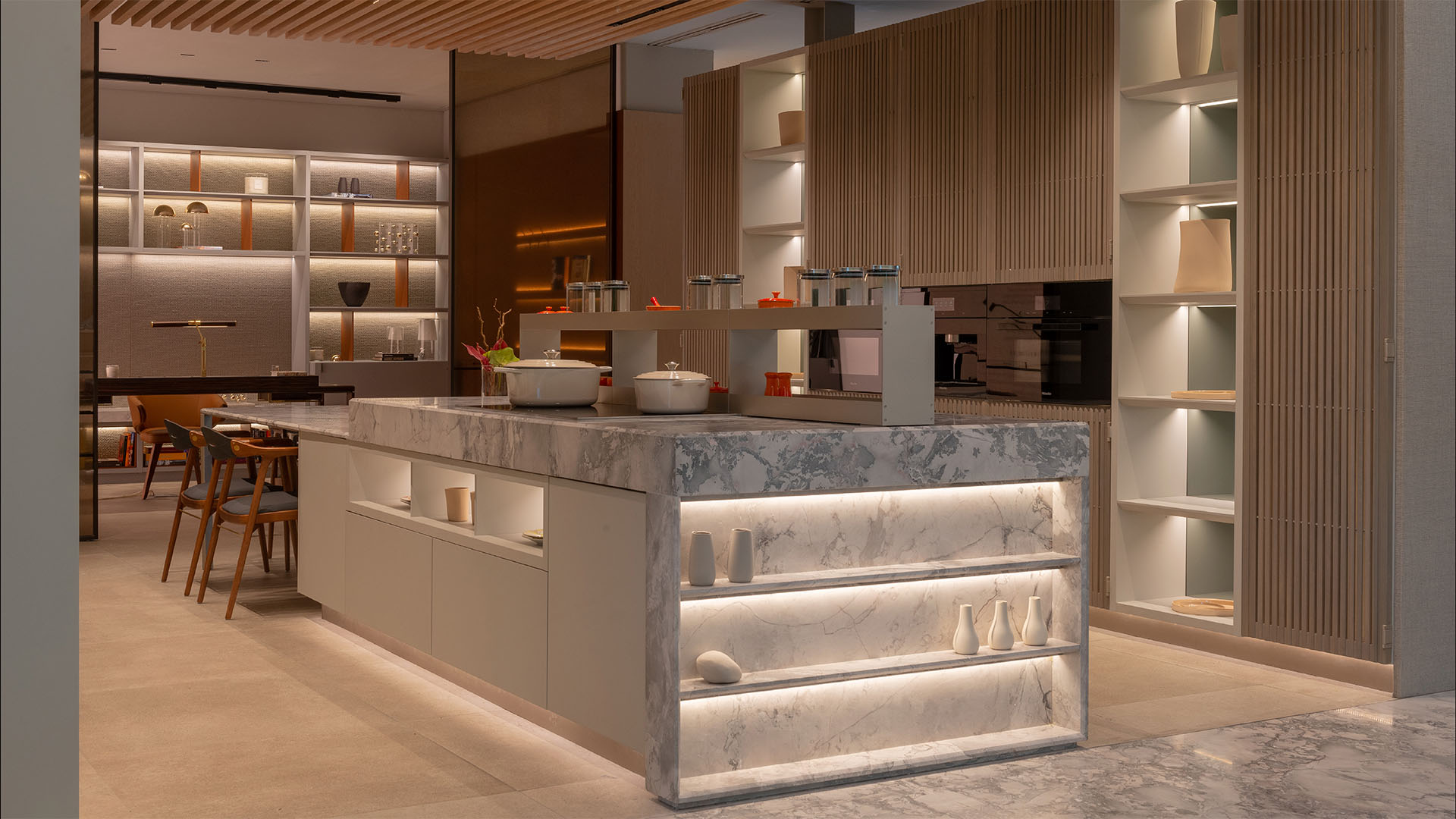
Ornare’s approach inverts this sequence entirely. The buffet function — surface, storage, display — gets designed into the wall from the start, as part of a system that treats the kitchen and dining area as a single continuous environment rather than two separate rooms with separate furniture problems.
What a kitchen buffet cabinet actually needs to do: storage, surface, and display in one unit
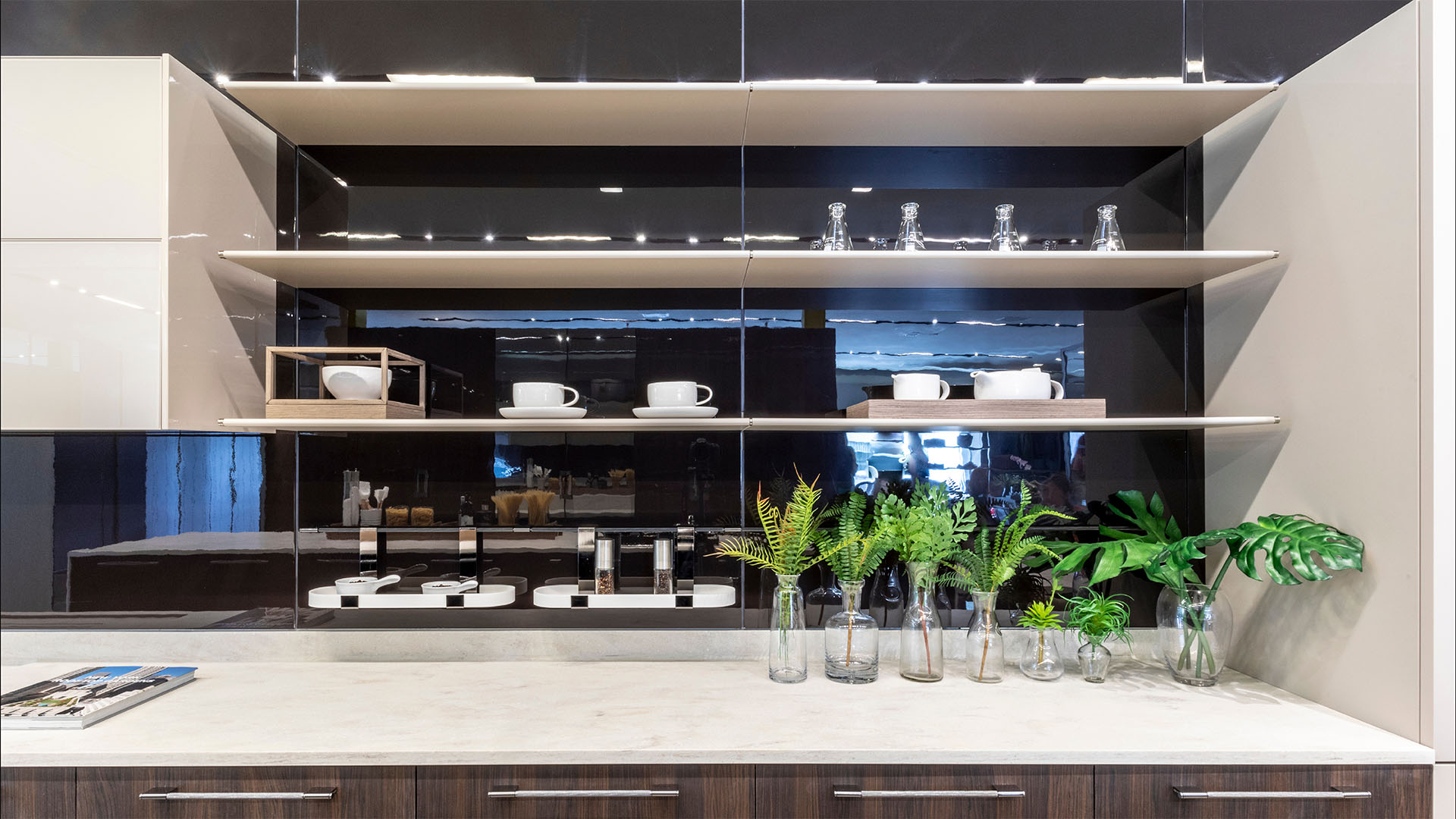
Before deciding on any specific design, it’s worth being precise about what a buffet cabinet in a kitchen or dining context actually has to accomplish. The storage requirements are usually more varied than they first appear: serving dishes that only come out for dinner parties, everyday glassware that needs to be accessible, wine that needs a dedicated section, linens, candles, and the miscellaneous items that accumulate in any space used for entertaining. A buffet cabinet that handles all of this well is organized differently from the outside than it is on the inside — closed fronts that look clean and intentional, with an interior that’s divided and configured specifically for what it contains.
The surface matters too, and not just as a place to put things during a meal. In an open-plan home, the top of the buffet is a permanent display surface — visible from the living area, from the kitchen, from the entry — and it needs to be made of a material that looks good under constant observation.
A marble or stone top on a kitchen buffet elevates the entire piece from functional storage to a design element with real presence. The display component — whether open shelving above the cabinet section, glass-front doors, or a combination — determines whether the buffet reads as furniture or as architecture.
Ornare wall systems as kitchen buffet cabinets: how the approach changes the result
The collections within Ornare’s Bookshelves & Multimedia line translate directly into buffet cabinet configurations for kitchen and dining spaces. Wall System Living is the most flexible: it can be configured with a lower cabinet section — closed storage at counter height — topped with open shelving, glass-front display units, or a combination of both. The proportions are determined by the wall dimensions and the specific storage requirements, not by what happens to be available in a standard size.
Timeless Bookshelf brings a more formal presence to the same function, with proportions and finishes that read as considered and permanent — the kind of piece that looks like it was always there, which is exactly the effect a well-designed buffet should create. Shaker Wall Bar integrates the bar function directly into the composition, which in a dining room context means bottles, glassware, and serving equipment all have a designated place within the same unit rather than being distributed across multiple pieces of furniture.
Square Wall takes the most architectural approach: the three-dimensional modular surface creates a buffet wall that’s as much about visual texture as it is about storage, which works particularly well in dining rooms where the buffet wall is a focal point rather than a background element.
Material and finish choices for a kitchen buffet cabinet: matching the kitchen without copying it
One of the more nuanced decisions in designing a kitchen buffet cabinet — particularly in an open-plan space where the buffet is adjacent to the kitchen — is how closely the two should match. An exact material match can make the buffet feel like an extension of the kitchen, which works well in some contexts and feels monotonous in others. A deliberate contrast — different wood species, different finish sheen, a different color family — can define the dining zone as a distinct area within the open plan while still maintaining enough visual coherence that the two don’t compete.
Ornare works through this decision with physical material samples rather than digital swatches, which matters because the relationship between two finishes is almost impossible to evaluate accurately on a screen. The Houston showroom at 3951 San Felipe and the Dallas Design District location are both set up with adjacent kitchen and living/dining installations that show how different material relationships play out at full scale — useful reference points for anyone working through this decision. The Greenwich and Hamptons locations serve a similar function for clients on the East Coast whose homes often have the kind of formal dining rooms where the buffet wall is a significant design investment.
Sizing and positioning a kitchen buffet cabinet: the measurements that determine whether it works
A buffet cabinet that’s the wrong height, the wrong depth, or positioned on the wrong wall creates problems that no amount of styling can fix. Counter height — typically 36 inches — works well as a serving surface and integrates visually with kitchen counters in an open-plan space. A lower height, around 32 to 34 inches, reads more as furniture and less as millwork, which suits dining rooms where the buffet should feel like a designed piece rather than a built-in. Going taller — to 42 inches or bar height — changes the function entirely, turning the buffet into a standing workspace or bar counter rather than a serving surface.
Depth matters because of how the buffet relates to traffic flow in the space. A standard depth of 18 to 24 inches is enough for most storage functions and leaves adequate clearance in a dining room. Shallower configurations — down to 14 or 16 inches — work in tighter spaces where a full-depth unit would intrude on the room.
Ornare builds to whatever depth the space requires, which is particularly relevant in New York apartments, New Jersey homes, and Washington D.C. townhouses where dining rooms are often compact and every inch of clearance matters. The ability to specify exact dimensions rather than choosing from fixed module sizes is one of the practical advantages of working with a custom system rather than a catalog product.